


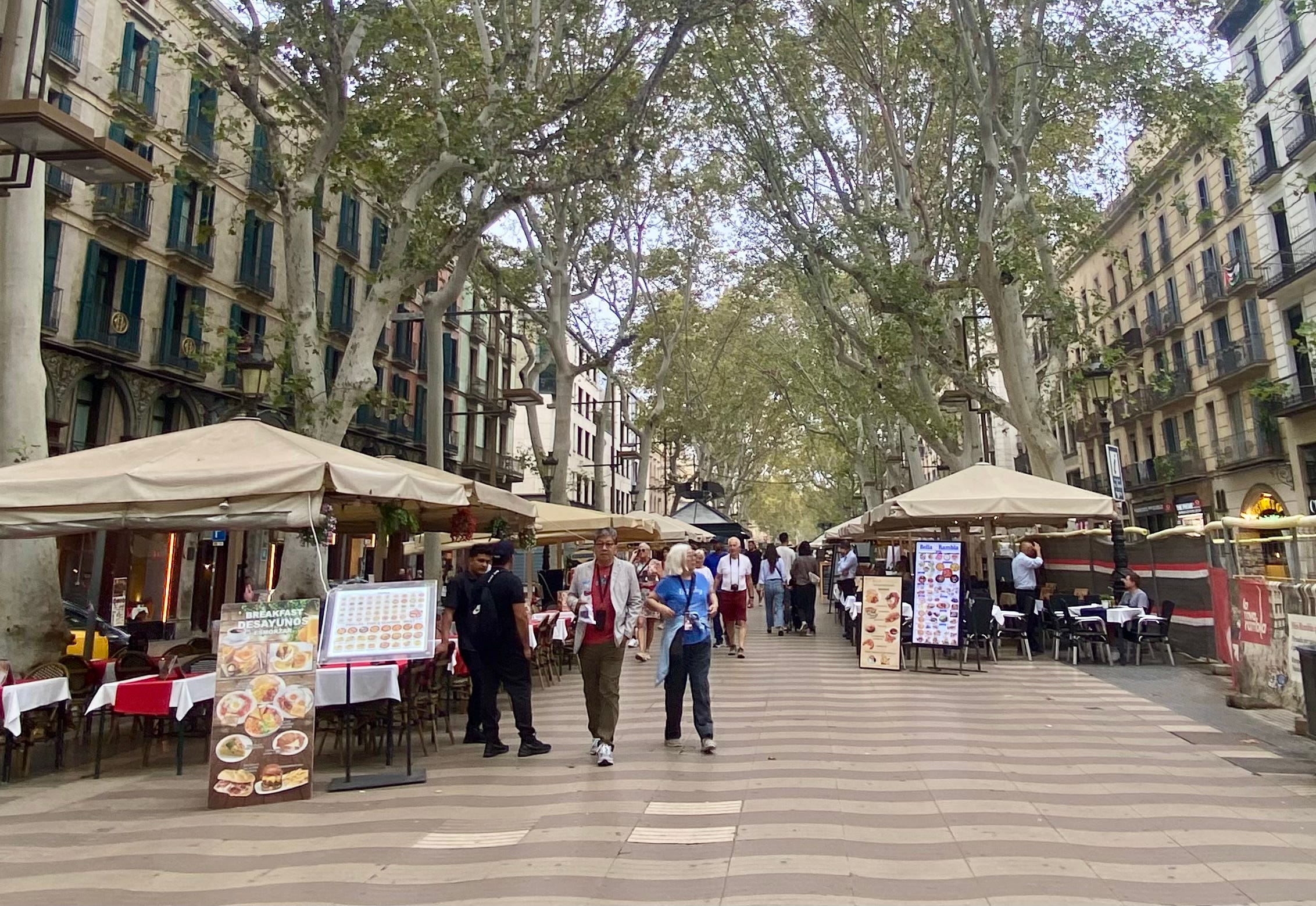
Barcelona blends Mediterranean lifestyle with big-city infrastructure: reliable internet, excellent public transit, walkable neighborhoods, and a thriving café and coworking culture. Add in sunny weather, beaches minutes from the city center, and a rich food scene, and it’s easy to see why remote workers choose Barcelona for slow travel or as a long-term base.
Lifestyle here strikes a balance between productivity and quality of life. Many nomads settle into neighbourhoods like Eixample, Gràcia, or Poblenou, where mornings might start with a café con leche at a corner café before heading to a coworking space or working from a sunny apartment balcony.
Barcelona also offers the cultural depth of a major European city without the extreme price tags of places like London, Paris, or Zurich, though rising housing costs have narrowed that gap in recent years.
For digital nomads in 2026, typical monthly costs vary widely depending on lifestyle and housing choices. A lean but comfortable solo budget usually starts around $2,800–$3,500 per month, while a more flexible lifestyle with central housing, coworking memberships, and regular dining out often lands closer to $4,000–$5,000 per month.
In this guide, we break down the major categories—housing, food, transportation, work infrastructure, and healthcare—to help you estimate what living in Barcelona might actually cost.
Keep reading for:
Cost of Living in Barcelona at a Glance
Barcelona Housing Costs
Food & Groceries in Barcelona
Transportation in Barcelona
Healthcare Costs
Barcelona’s Remote Work Infrastructure
Estimated Monthly Budgets
Is Barcelona Affordable for Digital Nomads?
Downsides to Consider
The Bottom Line
Cost of Living in Barcelona at a Glance
Barcelona Housing Costs
Barcelona’s housing market has become one of the most challenging in Europe over the past decade. Strong tourism demand, a growing remote work community, and limited housing supply have pushed rents steadily upward.
For digital nomads and expats, that means higher prices than many expect from Spain. Short-term rentals in particular carry a premium, and competition for well-located apartments can be intense, especially in popular central neighbourhoods.
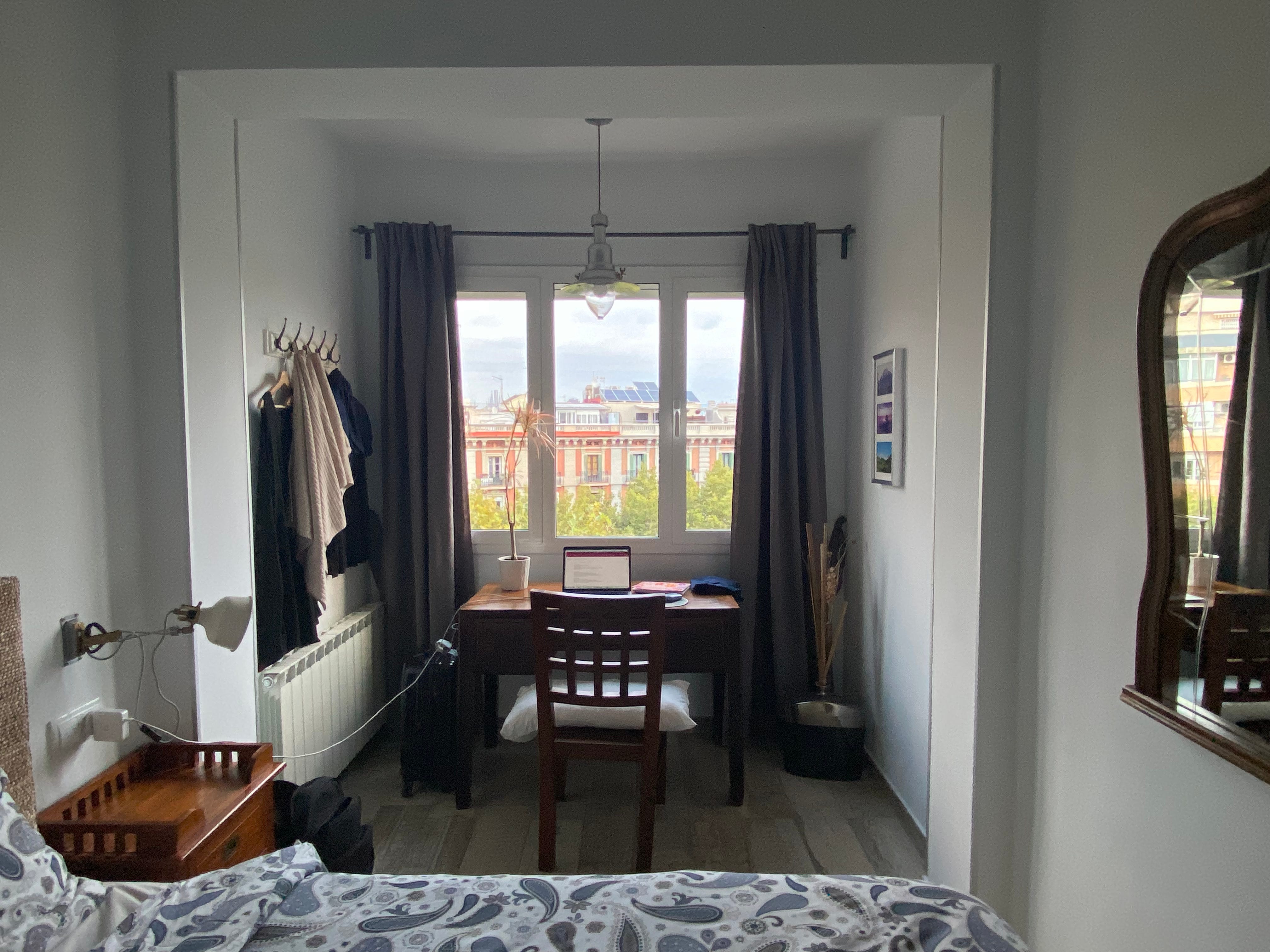
For a furnished one-bedroom apartment in the city center, short-term rentals typically run about $2,200–$3,200 per month, depending on the neighbourhood, building quality, and whether utilities are included.
Apartments outside the city center generally range from $1,600–$2,400 per month for similar furnished units. Utilities for a small apartment usually fall around $110–$190 monthly, while high-speed fiber internet typically costs $40–$60.
Long-term leases (usually 12 months or more) are significantly cheaper, but these apartments are often unfurnished, meaning tenants may need to purchase furniture and appliances.
Most digital nomads gravitate toward neighbourhoods that balance walkability, good cafés, and proximity to coworking spaces.
El Born and the Gothic Quarter are popular for their historic atmosphere and nightlife, though apartments here can be small and expensive.
Gràcia attracts many expats with its village-like feel, lively plazas, and creative scene. Eixample offers wider streets, modern apartments, and excellent transit connections, making it one of the most practical choices for longer stays.
Areas slightly farther out, like Poblenou or Sant Antoni, can offer better value while still providing a vibrant local lifestyle.

It’s also important to understand the local housing debate before settling in. Barcelona has faced a well-documented housing shortage, and many residents feel that short-term rentals and foreign demand have driven prices beyond what locals can afford.
The city has introduced regulations to limit tourist apartments and tighten rental rules, and public sentiment around housing can be sensitive.
For digital nomads planning a longer stay, choosing legal rentals, respecting local regulations, and considering longer-term leases instead of short-term tourist units can help reduce pressure on the local housing market while integrating more responsibly into the city.
Recommended:

Food & Groceries in Barcelona
Barcelona is one of the best cities in Europe for eating well without completely wrecking your budget.
An inexpensive restaurant meal typically costs about $11–$17, especially at casual cafés, tapas bars, or neighborhood lunch spots. If you sit down for a mid-range dinner for two, expect to pay roughly $60–$90, including a couple of drinks.


Many locals still take advantage of the weekday “menú del día” — a fixed-price lunch that often includes multiple courses and a drink for surprisingly good value.
Groceries are relatively affordable compared to many North American cities. A single person cooking most of their meals can usually expect to spend around $240–$400 per month, depending on dietary preferences and how often they shop at local markets versus higher-end supermarkets.
Discount chains like Lidl and Mercadona keep costs down, while neighborhood produce markets offer fresh fruit, vegetables, and seafood at reasonable prices.
Staples such as bread, olive oil, cured meats, and seasonal produce are widely available and tend to be good quality even at lower price points. For example:
Milk (regular, 1 liter): $1.20–1.60 USD
Fresh white bread (500g loaf): $1.70–2.50 USD
Eggs (12 large): $4.00–5.50 USD
Rice (white, 1kg): $1.00–1.80 USD
Chicken fillets (1kg): $4.00–6.50 USD
Local cheese (1kg): $7.00–12.00 USD
Apples (1kg): $1.30–2.00 USD
Bananas (1kg): $0.95–1.50 USD
Tomatoes (1kg): $1.25–2.00 USD
Potatoes (1kg): $0.90–1.30 USD
Olive oil (1 liter): $6.00–9.00 USD
Pasta (500g): $0.80–1.50 USD
For many digital nomads, the lifestyle ends up being a mix of both worlds. Cooking at home keeps the budget manageable, especially for breakfast and weekday meals, while Barcelona’s café and tapas culture makes it easy to eat out regularly without overspending.
Grabbing a coffee and pastry while working from a café or meeting friends for tapas in the evening is common — and because restaurant prices remain relatively moderate, eating out a few times a week can still fit comfortably within a typical nomad budget.
Transportation in Barcelona
Barcelona offers digital nomads an efficient, highly walkable transportation system that makes owning a car unnecessary for most people.
The city blends reliable public transit with plentiful ride-hailing options, making it easy to move between popular nomad neighborhoods like Eixample, Gràcia, and Poblenou.

The TMB metro and bus network reaches most major coworking hubs and residential districts, while compact areas like Barceloneta or El Born make daily errands easily manageable on foot. In many neighborhoods, it’s entirely possible to reach cafés, markets, and workspaces within a 15–20 minute walk.
Monthly transportation costs are relatively modest for a solo nomad. A 30-day unlimited public transit pass typically costs about $45–65 USD, depending on zones, and covers metro, buses, and some regional trains.
When you need a quicker trip, ride-hailing services like Cabify or Free Now usually run $9–16 USD for a typical 5 km ride. Even with a few rides per week, transportation expenses remain manageable compared to many major European cities.

Car ownership, on the other hand, rarely makes financial or practical sense in Barcelona. Between insurance, parking, fuel, and permit zones, monthly costs can easily reach €300–€500, not to mention the challenge of finding parking in central neighborhoods.
Most residents rely instead on a combination of transit, walking, and occasional ride-hailing. For extra flexibility, the city’s Bicing bike-share system and e-scooters provide a convenient middle ground, with memberships and usage typically costing around $20–40 per month for regular riders.
Recommended:

Healthcare Costs
Barcelona’s healthcare system combines Spain’s universal public coverage (CatSalut) with a strong private sector that many digital nomads rely on. Because access to the public system typically requires residency, most nomads use private clinics and hospitals instead.
Fortunately, Barcelona’s private healthcare is excellent, with modern facilities, highly trained specialists, and relatively short wait times.

Major hospitals such as Quirónsalud and Teknon are known for EU-standard care, English-speaking staff, and advanced diagnostics, making them especially appealing for midlife nomads who prioritize preventive care and easy specialist access.
Typical private healthcare costs remain relatively reasonable compared to North America. A general doctor consultation usually runs about $65–$130 USD for a standard appointment, while routine services such as dental cleanings typically range from $75–$140 USD.
Many longer-stay nomads opt for private health insurance through providers like Sanitas or Cigna, with annual plans generally costing $950–$1,900 USD depending on age and coverage level.
These policies often include emergency care, general practitioner visits, and optional dental coverage. Some expats combine insurance with occasional pay-per-visit clinics for services outside their plan, keeping healthcare predictable within a typical Barcelona digital nomad budget.
Barcelona’s Remote Work Infrastructure

Barcelona offers one of the most reliable digital infrastructures in Southern Europe, making it an easy city for remote work.
Fiber internet is widely available across the city, with average download speeds around 170–270 Mbps and some providers like Digi or Orange regularly exceeding 240 Mbps. Latency typically sits near 25 ms, which is more than adequate for video calls, cloud-based work, large file transfers, and 4K streaming.
In most central neighborhoods popular with expats—such as Gràcia, Eixample, and the 22@ innovation district in Poblenou—internet outages are rare and usually brief.
Coworking in Barcelona
Barcelona also has a thriving coworking scene with 50+ coworking spaces spread throughout the city.
Well-known hubs like Betahaus in Poblenou offer unlimited memberships around $190–$340 per month, complete with ergonomic workstations, meeting rooms, and regular networking events.
Recommended:

Global operators such as WeWork maintain multiple locations in Eixample, with memberships typically starting around $250+ per month depending on access level.
For a more casual setup, many nomads work from specialty cafés such as Federal Café or Syra Coffee, where free Wi-Fi speeds of 50–200 Mbps and a $2–$3 coffee can easily power several hours of laptop work.
Barcelona’s Timezone

Time zone alignment is another advantage for remote professionals. Barcelona operates on Central European Time (CET), which works well for collaboration with European clients during the day while still allowing overlap with North American teams in the morning hours.
Many nomads find the 7–11 a.m. Barcelona window ideal for U.S.-based calls. Meanwhile, widespread 5G coverage averaging around 90–100 Mbps provides a reliable mobile backup, making it easy to stay connected when moving between apartments, coworking spaces, and cafés.
Estimated Monthly Budgets
Is Barcelona Affordable for Digital Nomads?
Barcelona tends to work best for digital nomads earning $4,000+ USD per month, particularly midlife professionals coming from high-cost cities such as Toronto, Vancouver, London, or New York. For this group, the city offers a form of quality-of-life arbitrage rather than extreme cost savings.
Reliable infrastructure, walkable neighborhoods, strong healthcare, and a vibrant cultural scene allow many remote professionals to maintain a comfortable lifestyle on roughly $4,200–$5,200 per month, depending largely on housing choices.

The main trade-off is housing. Short-term furnished rentals in central neighborhoods often start around $2,200 per month or more, which is significantly higher than classic nomad hubs in Southeast Asia or Latin America.
Barcelona isn’t a bargain-basement destination, and travelers trying to live on very lean budgets may find it challenging to stay under $3,500 per month without compromising location or lifestyle.
Recommended:

For higher-earning remote workers, however, the equation shifts. Barcelona offers European time zones, fast fiber internet, excellent public transit, and access to premium coworking and healthcare, all within a city that prioritizes walkability and outdoor living.
While it may not be the cheapest nomad base, many professionals find the overall lifestyle—Mediterranean climate, culture, and connectivity—well worth the cost.
Downsides to Consider
Barcelona is an incredible place to live and work remotely, but it’s not without its challenges.

Air quality
During summer, Saharan dust occasionally drifts into the region, and winter temperature inversions can trap pollution over the city. Air quality levels usually sit in the moderate range (AQI roughly 50–100)—generally manageable, but not as consistently clean as smaller coastal towns.
Bureaucracy
Spain is known for paperwork-heavy processes, and tasks like opening a bank account, registering for services, or applying for longer-term residency can take patience.
Visa options such as the non-lucrative residence permit or digital nomad visa can take several months to process, and regulations around short-term rentals have tightened in recent years as the city tries to address housing shortages.
This has reduced the number of tourist apartments and made finding legal short-term accommodation more competitive.
Seasonality

Peak tourism between June and September brings large crowds to central areas like the Gothic Quarter, Barceloneta, and Las Ramblas, often driving up prices and noise levels. Many residents plan vacations during August when the city is at its busiest.
Winters are mild by northern standards—generally 50–60°F (10–16°C)—but they can be surprisingly gray and rainy, with occasional stretches of damp weather.
Petty crime
Finally, like many major tourist destinations, petty crime—especially pickpocketing—does occur, particularly in crowded areas and transit hubs.
Staying aware of your surroundings and avoiding obvious tourist traps goes a long way toward minimizing issues.
Most long-term residents quickly learn which neighbourhoods and habits make daily life smoother, and local expat communities are often a great source of practical tips for navigating the city comfortably.
Recommended:

The Bottom Line on Barcelona
Barcelona makes sense for digital nomads who want a high-quality European base rather than the absolute lowest cost of living.
If you’re earning around $4,000–$5,000+ per month, the city can support a comfortable lifestyle that includes a good apartment, reliable work infrastructure, and plenty of room to enjoy daily life—whether that’s long lunches, beach walks, or late-night tapas with friends.
Where Barcelona really stands out is in the overall lifestyle equation. Few cities combine walkability, strong public transit, fast internet, excellent healthcare, and a deep cultural scene quite as seamlessly. You’re not sacrificing infrastructure for sunshine—you get both.
The trade-off is that Barcelona rewards stable, mid-to-high remote incomes, not ultra-lean travel budgets. If your work supports that level of spending, the city can function less like a short-term nomad stop and more like a place where remote professionals build a real rhythm of life.
Disclaimer
Cost of living estimates in this guide are based on the best available data at the time of publication, including local listings, price databases, and market averages. Actual costs can vary depending on neighbourhood, lifestyle, exchange rates, and market conditions. Always confirm current prices through local sources before making relocation or budgeting decisions.
This guide is part of the Midlife Nomads Cost of Living Index.
Sources
Cost estimates in this guide are based on publicly available market data and local listings, including:
Numbeo cost-of-living database
Expatistan price comparisons
Local real estate listings and rental platforms
Supermarket price checks and restaurant menus
Coworking space pricing and local service providers
All prices are converted to USD for consistency.
You might also like:


