

Da Nang, Vietnam Costs of Living for Digital Nomads & Remote Workers (2026)
What Da Nang actually costs in 2026: $1,100–1,600 a month for a comfortable setup. Rent, food, healthcare, and the two things money won't fix.


Da Nang has become one of Southeast Asia’s most talked-about bases for remote workers, and unlike a lot of cities that earn that description, it has stayed livable while it grew. A long stretch of city beach, fibre internet in most apartments, an international airport with direct flights across the region, and a cost structure that lets a Western remote income go a long way.
It’s also one of the harder places to get accurate cost numbers for.
Search in English and you’ll find one set of rents. Search in Vietnamese and you’ll find another, roughly 40% lower, for what looks like the same apartment. Neither set is wrong; they’re just measuring two different markets.
This guide uses both. Housing figures were cross-checked against Numbeo, live agency listings from August 2026, and asking rents compiled from Vietnamese-language listing portals. Healthcare prices come from published hospital price lists rather than estimates.
In practical terms, a single remote worker can live comfortably in Da Nang for about $1,100 to $1,600 USD per month, including a furnished one-bedroom near the beach, coworking access, eating out most days, and a rented motorbike.
A leaner setup runs closer to $700 to $1,000. A more comfortable version, with a modern tower apartment and private health insurance, lands around $2,000 to $2,500.
The sections below break those numbers down, from rent and groceries to coworking, transportation, and healthcare.
Keep reading for:
Cost of Living in Da Nang at a Glance
Da Nang Housing Costs
Food and Groceries in Da Nang
Transportation in Da Nang
Healthcare Costs
Da Nang’s Remote Work Infrastructure
Estimated Monthly Budgets
Downsides to Consider
The Bottom Line
Cost of Living in Da Nang at a Glance
This info was compiled in USD at roughly 26,300 dong to the dollar. Housing figures reflect the English-language rental market, where most foreigners sign their first lease; the Vietnamese-language market runs lower, and the housing section covers how to get there.
This is approximately what a foreign resident can expect to pay without negotiation.
Da Nang Housing Costs
The city’s rental stock is well suited to foreign tenants: apartments are almost always let furnished, with air conditioning, a basic kitchen, a washing machine, and a fibre connection already installed.
Leases typically run three, six, or twelve months, and most landlords in the foreigner-facing market will sign on a passport and visa without requiring a residence card.
Unfurnished units exist but are rare in the buildings that cater to internationals, and they rarely make sense for a stay under a year.
The wider gap is between renting in English and renting in Vietnamese. Live agency listings from August 2026 put furnished studios and one-bedrooms in the beach neighbourhoods at $350 to $670 per month, which lines up closely with what Numbeo reports for a city-centre one-bedroom.
Asking rents compiled from Vietnamese-language listing portals put a comparable studio at 6.5 to 8 million dong, roughly $250 to $310, with basic units in outer districts starting nearer 4.5 million.
That difference is simply the cost of the transaction happening in your language, with terms you can read, arranged before you land. Plenty of people pay it for the first few months before moving down a tier once they know the neighbourhoods.
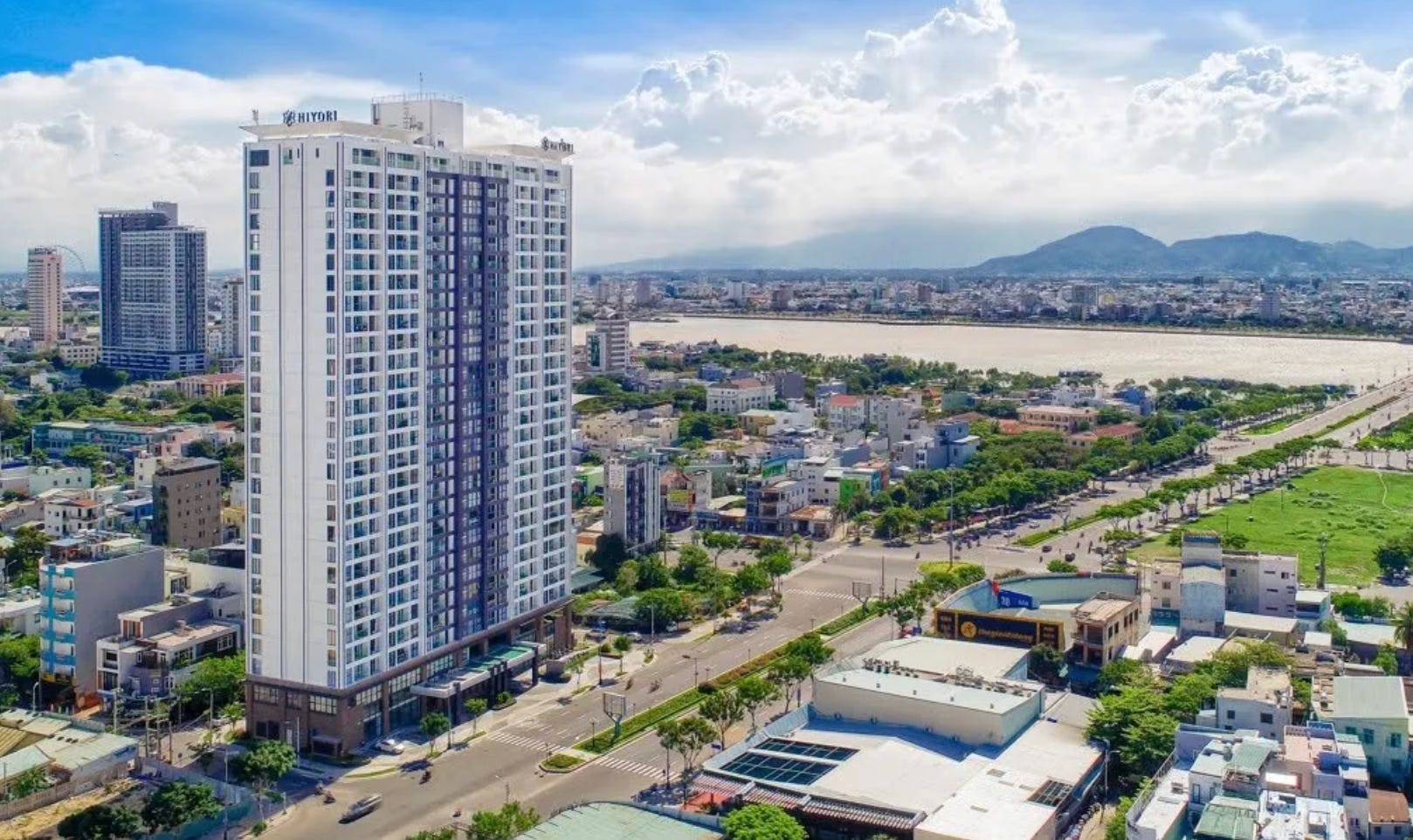
Newer tower buildings like Panoma and Hiyori Garden Tower sit above both ranges at $830 to $990. But outside the central areas, one-bedrooms drop to the $265 to $455 range.
Most remote workers cluster in three areas:
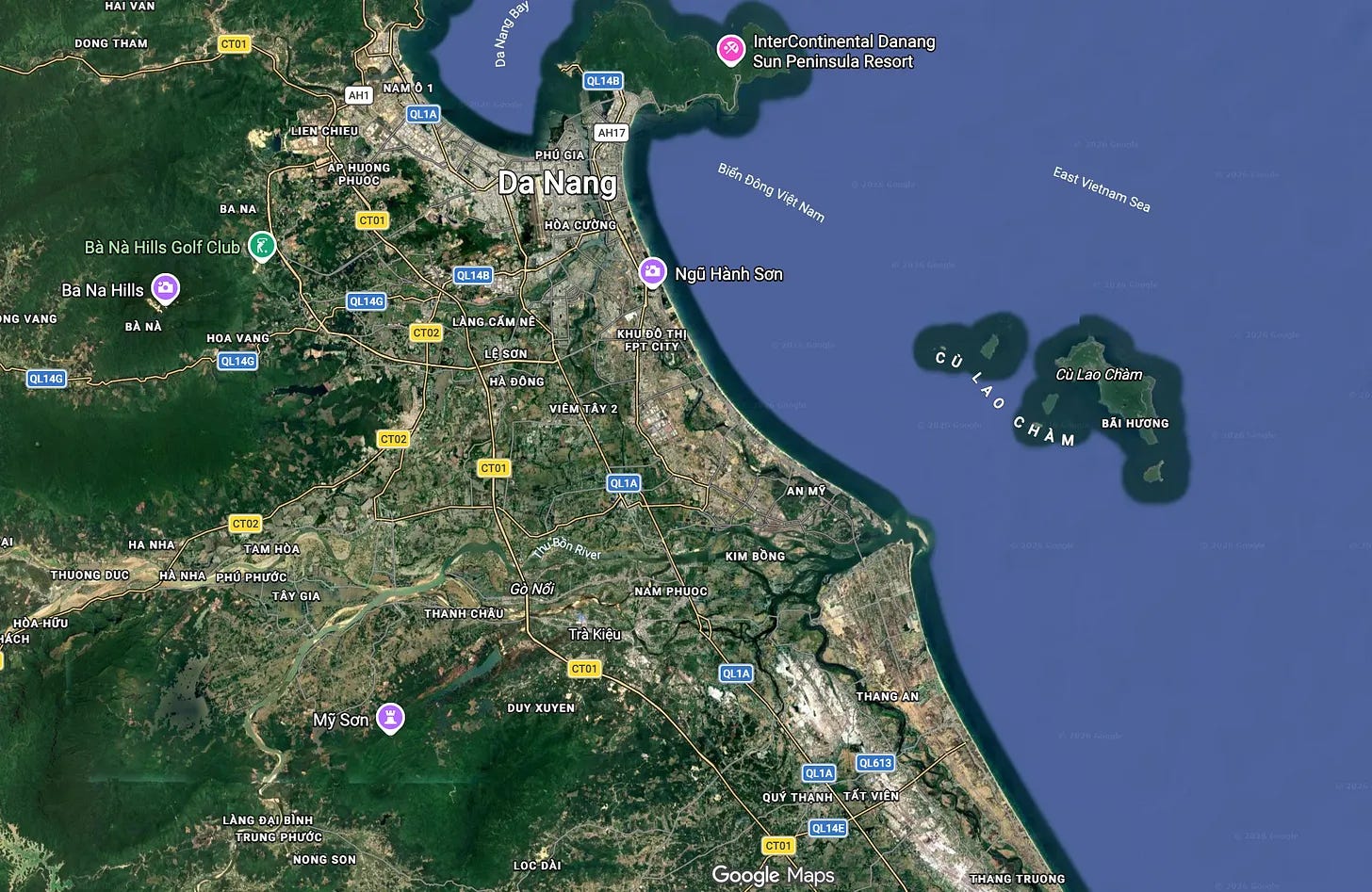
An Thượng and Mỹ An, in Ngũ Hành Sơn, form the established expat quarter. They’re walkable, dense with cafés and coworking, a few minutes from Mỹ Khê Beach, and the most expensive per square metre.
Sơn Trà and An Hải, across the Hàn River bridges, offer similar access to the beach at lower rents and a more residential feel; this is where the sub-$400 listings tend to be.
Hải Châu is the business district on the west bank, better for restaurants and errands than for beach access, with the city’s tower stock and its serviced apartments.
Short stays are priced differently, and it’s worth budgeting for that separately. Some studios accept one-month contracts, but the bulk of the market has a three-month minimum, and anything shorter usually means an Airbnb or a serviced apartment at a meaningful premium.
Upfront costs also vary more than the monthly rent does. Deposits run from one to two months, and some buildings require three to six months of rent paid in advance. On a $600 apartment, that’s a $600 deposit at one extreme and closer to $4,200 due on signing at the other.
If you’re testing Da Nang rather than committing to it, it’s worth asking about before you tour anything.
Food & Groceries in Da Nang

Da Nang is a food city before it’s anything else, and the prices reflect a market built for locals rather than visitors.
A bowl of mì Quảng, the regional noodle dish, runs 35,000 to 60,000 dong at a neighbourhood shop; somewhere between $1.35 and $2.30. Bánh mì from a cart is less.
A cà phê sữa đá costs 20,000 to 30,000 dong, though the same drink at a specialty café in An Thượng, made by someone who can tell you about the roast, is closer to 70,000.
Sit-down restaurants aimed at foreigners charge more. A mid-range dinner for two lands between $13 and $34, and the Western places along the beach strip sit at the top of that.
Expect groceries to run $120 to $250 a month for one person. Where you shop moves that number more than what you buy. The wet markets — Hàn Market, Chợ Cồn — price produce, herbs, and protein well below the supermarkets.


Big C and Lotte Mart are reliable and air conditioned and cost more. Imported cheese, decent wine, and anything labelled in English carry a markup that can double the item. For example, a litre of milk is about 37,000 dong, while a mid-range bottle of wine is 200,000.
For most people, the cooking-versus-eating-out math doesn’t hold the way it does at home. Two meals a day from local shops costs roughly $5 to $8, which is close enough to what groceries would run that the savings don’t justify the shopping and the dishes.
What does change the calculation is time and preference. If you’re managing blood pressure or cholesterol, or you’ve reached the point where you want to know exactly how much salt is in something, a kitchen stops being optional. Most long-stay apartments have one, and the markets make it easy to cook well.
Getting Around Da Nang
Much of Da Nang runs on two wheels. The city has a public bus network, and a monthly pass costs 100,000 dong (about $4) but the routes are built around commuter corridors rather than the places foreign residents actually go, and frequencies are low enough that most people try it once and don't return.
What replaces it is the motorbike, either your own rental or someone else's. Grab is the default app and it books both cars and bikes; a GrabBike across the beach side runs 20,000 to 40,000 dong, and a Grab car covering the same ground costs roughly double to triple that.
Xanh SM, the electric fleet from VinFast, has become a genuine competitor since launching and is worth having installed alongside Grab, since prices move between the two and Xanh SM's cars are newer.
Metered taxis exist, but you don't need them.
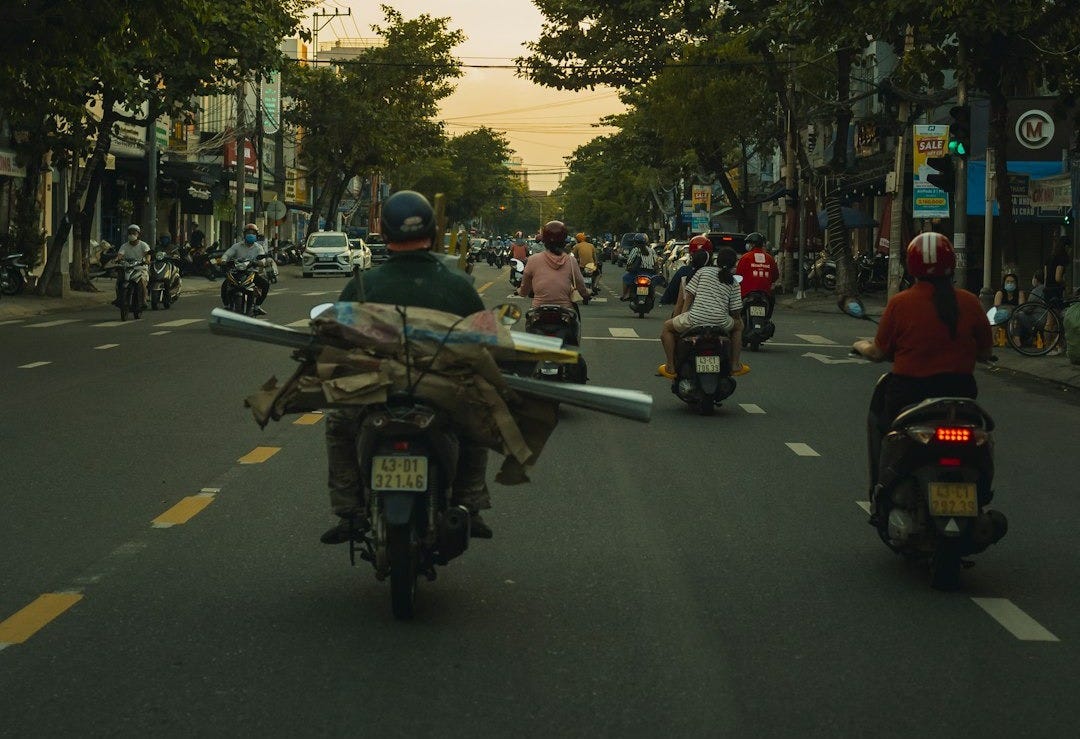
Renting a motorbike costs $50 to $80 a month for a standard automatic scooter, less on a longer commitment, and fuel is around 22,000 dong a litre, which works out to $10 to $15 a month for normal use.
Add it up and most remote workers spend $60 to $150 a month getting around. The low end is if you rent a bike and use it; the high end if you’re taking Grab cars daily.
Buying a used scooter runs $400 to $900 and only makes sense past six months. Car ownership is rare among foreigners, and the reasons are structural: parking is genuinely difficult, a Vietnamese licence is required, and the vehicle costs are high by local standards.
An Important Note
Riding a motorbike in Vietnam legally requires a Vietnamese licence or a valid international permit converted locally, and most travel insurance and expat health policies exclude motorbike accidents unless you hold the correct licence. Some exclude them regardless.
Da Nang’s traffic is calmer than Hanoi’s or Saigon’s, but road injury rates in Vietnam are high, and this is the single most common way a long stay goes badly wrong.
It’s worth reading your policy’s exclusions before you rent anything, and worth knowing that plenty of people over 50 base here quite happily without ever getting on a bike. It’s more workable in Da Nang than in most Southeast Asian cities.
The beach neighbourhoods are flat and reasonably walkable within themselves — An Thượng in particular has cafés, coworking, restaurants, and a market within a ten-minute radius, and the beachfront promenade runs for kilometres. Sidewalks are inconsistent and often parked on, and crossing a busy road takes a technique you'll acquire in about a week.
But if you choose your neighbourhood so that daily life sits inside a small radius, and use Grab for everything else, you can live here well without ever holding a set of vehicle keys.
Healthcare Costs in Vietnam
Da Nang's healthcare sits in the middle tier for Southeast Asia — better than most of Vietnam outside Hanoi and Saigon, behind Bangkok and well behind Singapore.
In practice, foreign residents use three levels. Da Nang Family Medical Practice, on Nguyễn Văn Linh, is the international clinic: every doctor consults in English, French and German are available, and there's an in-house pharmacy and lab plus a 24/7 hotline.
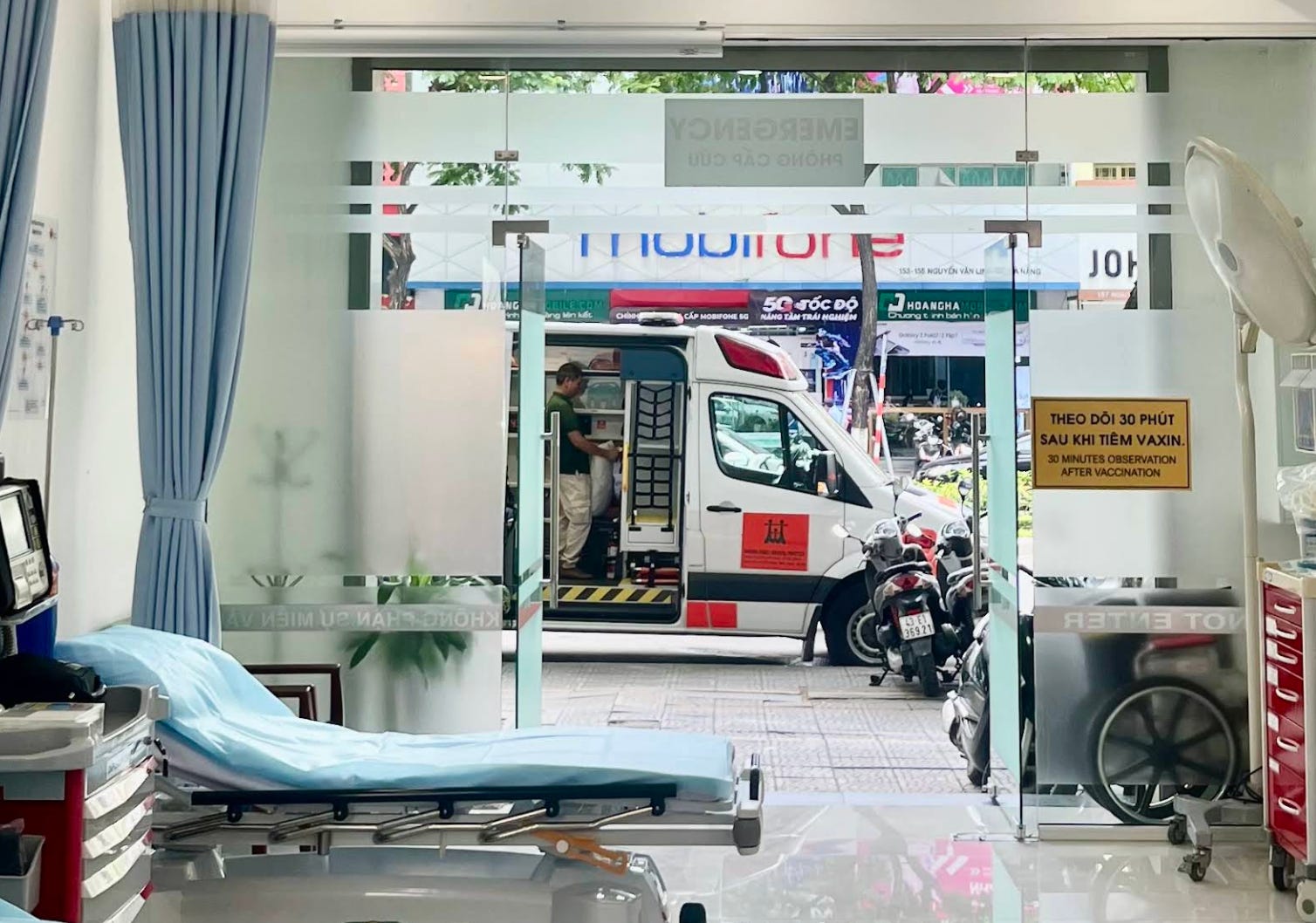
Vinmec Da Nang is the quality Vietnamese private hospital, with an international department, English-speaking staff, and far more capacity than a clinic.
Hoàn Mỹ is the cheaper private option and the one people mention for emergencies. Public hospitals cost less again, but are hard to use without Vietnamese. (For anything genuinely serious, the standard advice among long-term residents is evacuation to Bangkok or Singapore, which is a line item in your insurance rather than your monthly budget.)
The price spread between those tiers is wide enough to plan around. Vinmec’s published international price list, effective November 2025, puts a general consultation at 440,000 dong (about $17), a specialist consultation booked in advance at 690,000 (about $26), and a walk-in without an appointment at 1,100,000 (about $42).
Family Medical Practice runs $85 to $110 for the equivalent visit. That’s the cost of the appointment happening entirely in your language, and whether it’s worth three to five times the price depends on the day and the symptom.
Dental is cheaper across the board: a cleaning runs $10 to $50 depending on whether you go local or expat-facing, and Vietnam’s dental tourism reputation is earned.
Private health insurance is where the age curve bites. Regional Asia plans from providers like Luma or Pacific Cross are commonly quoted at $600 to $1,200 a year, but those figures reflect younger buyers. Budget $800 to $2,000 at 45 to 65, more with pre-existing conditions, and read the exclusions rather than the headline number.
Two things worth checking before you commit to a long stay:
Bring a supply of any prescription medication you take and confirm it’s available here before you run out — many drugs are, some aren’t, and Vietnamese pharmacies are permissive in ways that are convenient until the specific thing you need isn’t stocked.
And confirm your policy’s direct billing arrangements. Private hospitals in Vietnam require payment up front unless your insurer bills them directly, and finding that out at the admissions desk is a bad time to find it out.
Da Nang’s Remote Work Infrastructure
Internet is one of the least complicated things about basing here. Fibre from Viettel, FPT, or VNPT costs 138,000 to 255,000 dong a month (roughly $5 to $10) and in most long-stay apartments it’s already installed and folded into the rent or the utilities.
Speeds are comfortable for video calls, large file transfers, and everything short of heavy uploading.

What’s worth planning for is weather rather than infrastructure: Da Nang sits on a typhoon coast, and the October-to-December storm season brings power cuts that take the router down with them.
A mobile hotspot on a Viettel or Vinaphone data SIM is the standard backup, and data plans here are cheap enough that most people just keep one running.
The coworking scene is smaller than Saigon’s and better calibrated to remote workers. Enouvo Space is the one most often named, with two locations near Mỹ Khê and a coliving component attached; monthly memberships run roughly $50 to $100.

Toong is the more corporate option, part of a national chain, at $80 to $120. Day passes across the city sit between $5 and $10, which makes it easy to try several before committing.
Café culture does real work here, too. An Thượng and Mỹ An are dense with cafés that have power outlets, decent wifi, and no expectation that you’ll leave after an hour. A coffee costs $0.75 to $2.70 depending on whether you’re at a local shop or a specialty roaster, and for a lot of people that’s the entire workspace budget.
The time zone is UTC+7. If your clients are in Europe, it’s straightforward… their morning is your afternoon, and the overlap is generous. North America is more difficult. A 9 a.m. call in Toronto is 8 p.m. here; a 9 a.m. call on the west coast is 11 p.m.
Some people restructure toward asynchronous work and take the freedom. Some hold two or three evening calls a week and find it fine. Some discover after a month that their business doesn’t actually permit it.
That’s worth testing on a short stay before you sign a six-month lease.
Estimated Monthly Budgets
Budget — $600 to $900. This is a real Da Nang, not a stripped-down one, but it requires renting in the Vietnamese-language market and eating where locals eat. You’re in a studio in An Hải or Sơn Trà rather than An Thượng, working from cafés rather than a coworking space, and carrying either minimal insurance or none. The main cost of this tier is the time it takes to find the apartment.
Comfortable — $1,100 to $1,600. A furnished one-bedroom within walking distance of the beach, a rented scooter and Grab when it rains, a coworking membership, and eating out most days with the occasional imported-groceries run. Regional health insurance is built in at this level, which is where it belongs for anyone over 45. This is the tier most remote workers who stay more than a season settle into.
High-comfort expat — $2,000 to $2,500. A tower apartment with a pool, a gym, and a doorman, Grab cars instead of a scooter, and Western restaurants without thinking about it. Comprehensive insurance with evacuation coverage rather than a regional plan. It’s roughly a third of what the same type of setup costs in a mid-sized Canadian city.
Is Da Nang Affordable for Digital Nomads?

Yes, and by a wide margin… but affordability isn’t really the most interesting part of the answer.
Da Nang is not the cheapest place in Southeast Asia. Vietnam’s smaller cities run lower, and Chiang Mai beats it in some categories.
What Da Nang offers is a good cost of living attached to a city that works: a clean city beach, fibre in every apartment, a private hospital you can actually use, and an airport with direct flights across the region. Most places at this price point are missing at least one of those.
Best for: remote professionals earning in USD, CAD, EUR, or GBP who want a coastal base rather than a big-city one, and who can work asynchronously or take evening calls.
It suits people planning to stay at least three months, long enough to find an apartment on the local-market tier rather than the foreigner-facing one.
It suits anyone who’d rather live somewhere ordinary than somewhere designed for visitors. Da Nang is a working Vietnamese city of over a million people, not a nomad enclave, and for a lot of people in their 40s-70s+, that’s the appeal rather than the drawback.
Less good for: anyone whose work requires reliable overlap with North American business hours, anyone who wants a settled long-term base with a clear legal pathway, and anyone unwilling to be on or near a motorbike.
Downsides to Consider
Typhoon and Rainy Season
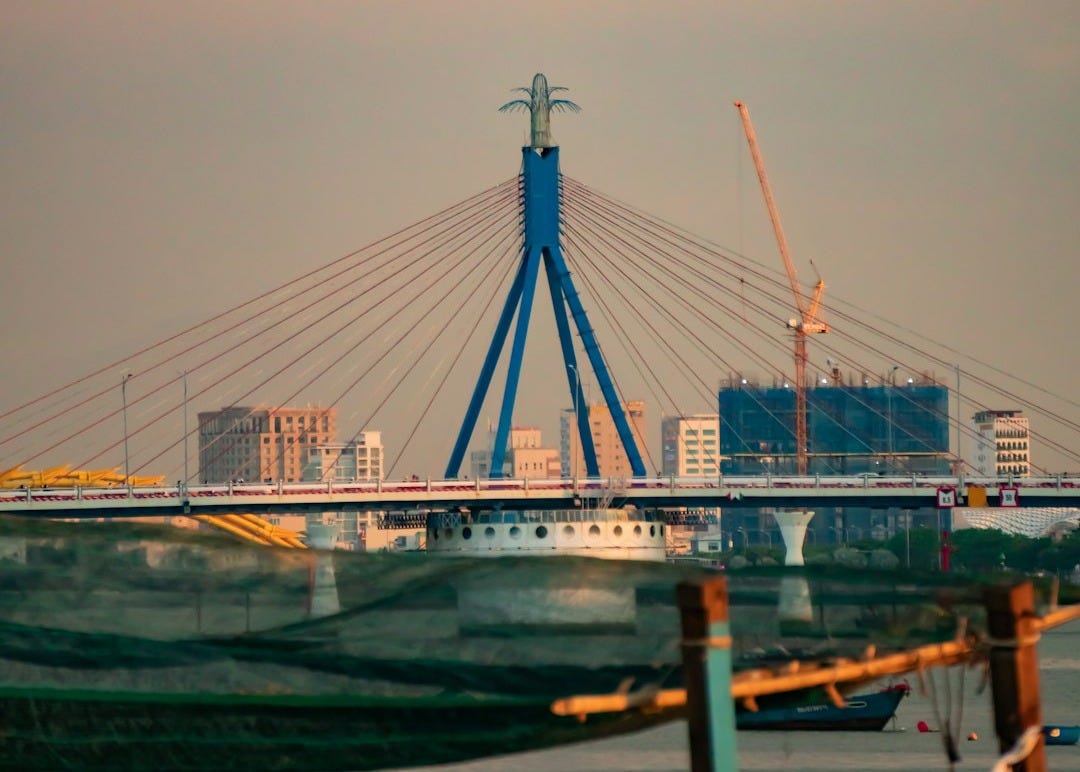
The single biggest seasonal factor. Da Nang sits on a typhoon coast, and the wet season runs roughly September through December, with October and November the heaviest. Expect multi-day rain, flooding in low-lying streets, and power cuts that take your internet down with them. Storms occasionally close the airport.
None of this makes the city unlivable, but it does mean four months a year when the beach isn’t the reason you’re there, and it’s why a mobile hotspot on a local data SIM is standard rather than cautious.
Visas and Bureaucracy
Vietnam has no digital nomad visa. The standard route is a 90-day e-visa, applied for online, followed by a border run or a fresh application when it expires. It’s workable and plenty of people have run it for years, but it isn’t a settled legal status, and it doesn’t build toward residency.
Explore:
Digital Nomad Visas: How Remote Workers & Entrepreneurs Live Abroad Legally

If you’ve been thinking about spending time abroad—working remotely, slowing down a bit, or just seeing what life looks like somewhere else—you’ve probably come across the term digital nomad visa.
Longer options exist through business or investment structures, which involve real paperwork and usually a lawyer. Reform has been discussed for a while.
Check the current rules before you plan around them, because this is the part of the picture most likely to have changed since this was published.
Motorbike Risk
Covered above but worth repeating here. Vietnam’s road injury rate is high, most travel and expat health policies exclude motorbike accidents unless you hold a valid Vietnamese licence or properly converted international permit, and some exclude them regardless.
Da Nang’s traffic is calmer than Hanoi’s or Saigon’s, and the beach neighbourhoods are walkable enough to live without a bike.
But this is the most common way a long stay in Vietnam goes seriously wrong, and it’s an insurance question before it’s a driving question.
Seasonal Tourism

Da Nang is a major domestic and international beach destination, and the summer months bring a lot of people. Mỹ Khê fills, the beachfront restaurants get slower, and short-term accommodation prices rise.
Long leases are largely insulated from this, but if you’re arriving on a one-month booking in June or July, expect to pay more and have less choice. The quieter shoulder months are cheaper and easier, with the trade-off that some of the social scene thins out with them.
Air Quality and Noise
Air quality is one of Da Nang’s genuine advantages over Hanoi, Saigon, and Chiang Mai — coastal wind, no burn season, and generally moderate readings year-round.
The daily-life irritant is construction instead. The city is building constantly, particularly in the beach districts, and a quiet apartment can acquire a jackhammer next door with no notice.
It’s the most common complaint among long-term residents and the easiest to check: ask what’s going up nearby before you sign anything, and look at the empty lots on your street rather than just the unit.
The Bottom Line
For a single remote professional in 2026, $1,100 to $1,600 a month covers a furnished one-bedroom near the beach, a scooter, coworking, eating out most days, and health insurance.
You can do it for $600 to $900 if you rent in the local market and eat where locals eat. The fuller, more luxury version — tower apartment, Grab cars, comprehensive coverage — runs $2,000 to $2,500.
The two things that will decide it probably aren’t money. Vietnam has no digital nomad visa, so you’re on a 90-day cycle until that changes. And UTC+7 is easy on European clients and hard on North American ones. Both of those are worth testing before you commit to six months.
Da Nang is a working Vietnamese city of over a million people. The cafés serve locals, the markets aren’t priced for visitors, and there’s no programme you’re meant to join. Whether that’s the appeal or the problem depends on what you’re looking for.
Disclaimer
Cost of living estimates in this guide are based on the best available data at the time of publication, including local listings, price databases, and market averages. Actual costs can vary depending on neighbourhood, lifestyle, exchange rates, and market conditions. Always confirm current prices through local sources before making relocation or budgeting decisions.
This guide is part of the Midlife Nomads Cost of Living Index.
Sources
Cost estimates in this guide are based on publicly available market data and local listings, including:
Numbeo cost-of-living database (Da Nang, updated August 2026)
Vinmec Da Nang published international price list (effective November 2025)
Live monthly rental listings from Da Nang letting agencies, August 2026
Asking rents compiled from Batdongsan.com.vn and Savills Vietnam market commentary
Coworking space pricing and ISP published rates
Supermarket price checks and restaurant menus
All prices are converted to USD for consistency.
You might also like:


