


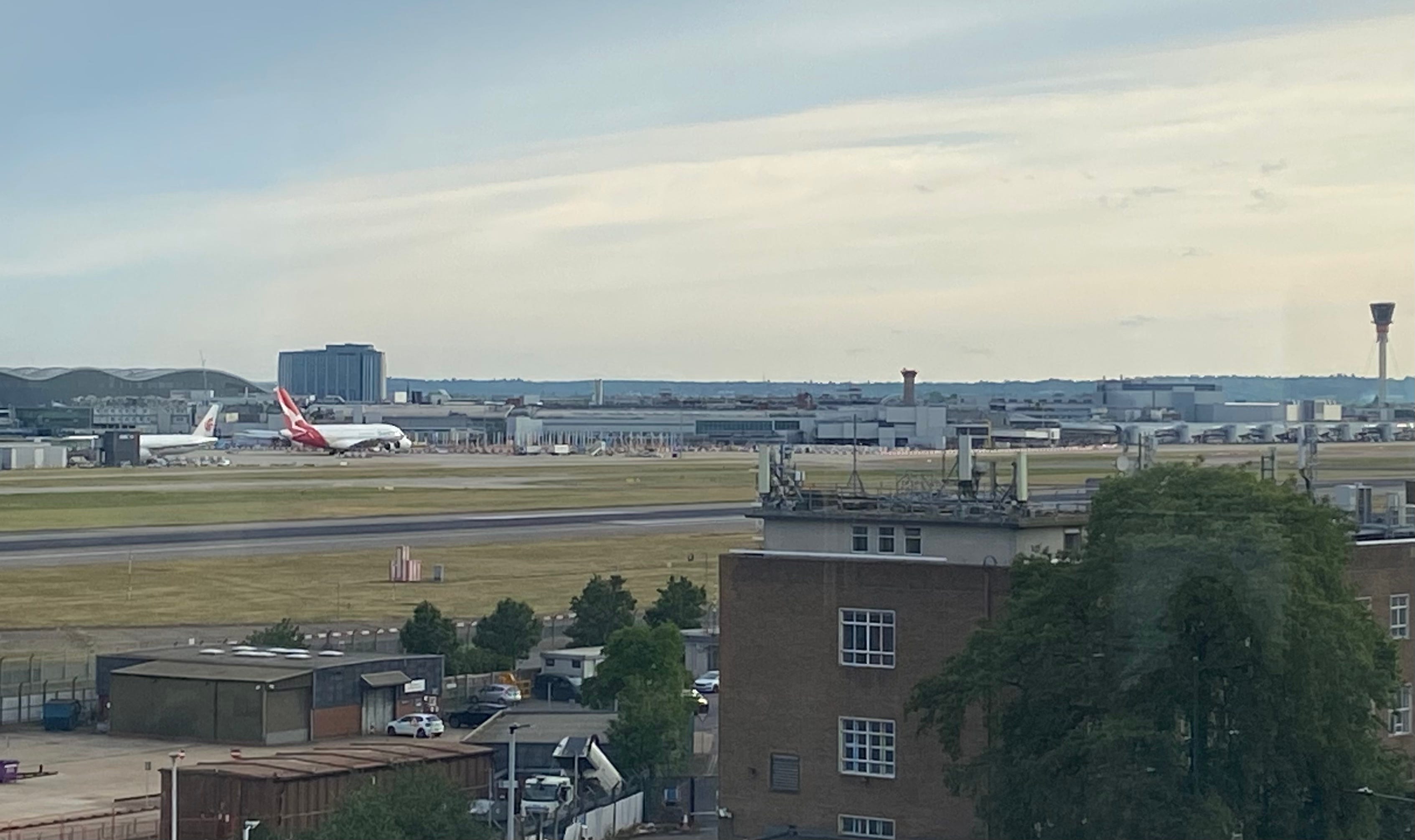
On September 8, 2026, a failure in the flight processing system run by NATS, Britain’s air traffic control provider, cut the rate at which departures could leave UK airports. Around a thousand flights were disrupted before engineers restored the system that evening.
Contrary to a lot of the coverage, airspace stayed open the whole time. Aircraft already flying were handled normally.
What broke was the ability to release new departures, and airlines canceled accordingly, at Heathrow, Gatwick, Manchester, Edinburgh and a dozen more.
Everyone caught in it had a bad day. But the passengers who lost real money were the ones whose second flight hadn’t been canceled at all.
Why the Second Ticket Is the Expensive One
If your trip is built from two separate bookings and a delay on the first makes you miss the second, no airline owes you a meal, a bed, a rebooking or a ride to where you were going.
The Civil Aviation Authority is direct about it: on a self-transfer, there’s no statutory right to care, compensation or onward transport when a delay causes you to miss a later flight. Each flight keeps its own protections. The link between them was never covered, because as far as the law is concerned there is no link.
You’ve probably booked this way. The transatlantic leg comes up on a sale or you have points to burn, so you book Toronto to London. Then you find the hop down to Porto for eighty dollars and book that separately. Two confirmations in your inbox, one trip in your head.
For someone flying to a beach week, this is a bad afternoon. For someone moving to a three-month base with a lease starting Monday, it’s a different order of problem.
Know If You’re Booking a Self-Transfer
One ticket means one booking reference covering the whole trip, even when different airlines fly different legs under a partnership. Two references mean two contracts, and the airlines have no obligation to each other and no idea you have somewhere else to be.
It has nothing to do with how long the layover is or whether the carriers seem related. It’s only about how many reservations you’re holding.
Search aggregators and “flight deal” sites that stitch together unconnected airlines routinely produce self-transfers. These are priced and displayed as one itinerary, with the word “self-transfer” sitting in small grey type next to the fare.
Know What You’re Giving Up
On a single booking, everything is calculated across the whole trip. Care thresholds and compensation use the distance from your first airport to your last. Miss the connection because leg one ran late and the airline has to feed you, let you contact people, and put you in a hotel with transfers if you’re stuck overnight.
If the onward flight is scrapped and you decide the trip is off, they fly you home. Past five hours of delay you can walk away and take a refund on what you haven’t used.
On separate tickets, none of that reaches across the gap. The second airline’s position is that its flight operated and you didn’t turn up, which is legally correct and commercially final. The first airline owes you whatever that one leg’s own rules require, measured on that leg’s distance, and not a penny toward the flight you missed or the night you now have to sleep somewhere.
Insurance isn’t the safety net people assume. A lot of missed-connection cover only applies when the legs were ticketed together, or requires a minimum gap between them. It’s worth reading your policy for the word “separate” before you rely on it.

This Isn’t a UK Problem
Many passengers assume they are protected by the laws of their home country, but your passport is irrelevant. UK261 covers any flight leaving a UK airport, whoever operates it, and covers flights into the UK when a British or European airline is flying. A Canadian departing Heathrow has exactly what a Londoner has. That same Londoner flying Chicago to Denver has almost nothing.
And the gap travels. Europe’s regulation is the parent of the British one and works the same way, with the courts having tied compensation across connections specifically to flights sitting on a single reservation.
Canada’s rules use the phrase “same itinerary” throughout, and two bookings are two itineraries by definition.
The United States never built a compensation regime at all, so what you have there is a refund when the airline cancels and you decline what they offer, plus whatever that carrier has promised in its own service plan.
Different regimes, one hinge. Protection follows the booking reference. What varies by region is only how much you had to give up.
You might also like:


Be Aware: Two Tickets Turn a Layover Into a Border Crossing
There’s a second cost to separate tickets that has nothing to do with money owed, and it doesn’t stop at the UK.
The mechanism is the same everywhere. On one booking, your bags are checked to the final airport and you never formally enter the connecting country. On two bookings, nobody is transferring anything. You collect your own bags, which means clearing immigration and customs, then checking in again from scratch.
The layover becomes an entry, and an entry means meeting that country’s entry requirements rather than its transit requirements. Those are different rules with different paperwork.
In the UK, that’s an Electronic Travel Authorisation. Home Office guidance exempts passengers who stay airside and requires one from everybody crossing the border, which now includes you. The guidance itself calls that exemption temporary and under review.
Since February 2026, the check happens before you board, so no authorisation on file means the airline in Toronto won’t let you onto the London flight at all.
An ETA runs £20 and covers two years. The airside exemption only applies at airports that have the facility, and not all of them do. Connecting onward to Ireland, or to a UK domestic flight, sends you through the border regardless.
The United States is the extreme case, and the one people get wrong most often, because it has no airside transit at all. Every person arriving on an international flight is inspected by Customs and Border Protection at the first US airport, collects their bags, clears customs and re-checks. That’s true on a single through ticket, not just a self-transfer.
Anyone changing planes in the US needs an ESTA or a visa, and the State Department lists transit alongside business and pleasure as a purpose the Visa Waiver Program covers. The ESTA is around $40 and lasts two years. Budget three to four hours for a US connection, because you are doing the full arrival process either way.
Canada, Australia and New Zealand operate closer to the US model than the European one, with limited or no general airside transit, so a connection through any of them is usually an entry with its own authorisation requirement.
The Schengen zone is the friendliest of the group, since genuine international-to-international connections can stay airside for most nationalities. But collect your bags there and you have entered Europe, which engages your 90-day allowance, and since April 2026 the Entry/Exit System records that crossing biometrically rather than as an ink stamp.
For someone running long stays close to the limit, a self-transfer through Frankfurt is no longer a free move.
Check the transit rules of every country you touch, not just the ones you meant to visit. On a single ticket, most of them never notice you. On two, all of them do.
When Booking Separate Tickets is Still the Right Call
Sometimes there’s no through fare to buy. Plenty of the smaller European cities people actually settle in for a season are served only by carriers who don’t interline with anyone. And the savings are occasionally large enough to be worth the exposure on its own terms.
What you control is the gap. Three hours between separate tickets is a bet on infrastructure that has now failed three times in three years at one UK provider alone.
An overnight in the connecting city turns that bet into a hotel bill you picked, on a date you chose. When the stay ahead of you is measured in months, landing a day later costs almost nothing.
The version of this that works best is the one where the layover stops being a layover. Two nights in the connecting city often comes in under the through fare, and the thing that could go wrong is no longer a problem waiting to happen.
Sources:
NATS, Technical Issue Causing Some Disruption to Flight Departures, Sept. 8, 2026
Reuters via U.S. News, Air Traffic Control Issue Disrupts Flights at Major UK Airports, Sept. 8, 2026
UK Civil Aviation Authority, Delays, accessed Sept. 9, 2026
UK Civil Aviation Authority, Consumer Travel Advice – Summer 2026, accessed Sept. 9, 2026
UK Civil Aviation Authority, Am I Entitled to Compensation?, accessed Sept. 9, 2026
Home Office, Electronic Travel Authorisation: Caseworker Guidance, accessed Sept. 9, 2026
U.S. Customs and Border Protection, For International Visitors, accessed Sept. 9, 2026
U.S. Department of State, Visa Waiver Program, accessed Sept. 9, 2026
U.S. Department of Transportation, Refunds, accessed Sept. 9, 2026
Canadian Transportation Agency, Regulations Amending the Air Passenger Protection Regulations, Canada Gazette Part I, Dec. 21, 2024 (draft, not in force)
Miranda great article and especially the cautionary advice about inadvertently creating a "border crossing" - especially relevant in the UK.