


I’ve been thinking lately about how hard it is to build a habit and make it stick. There are so many small things I keep meaning to do and somehow never get to.
Too often, they’re the fun things. The joyful things. The entertaining things… sometimes the purely silly things that make me happy anyway.
Part of the problem, for me, is that I tend to pack every open hour with work. There’s always something billable, something I’d feel guilty for skipping. We’ve built a whole culture around that guilt… around that mistaken belief that a moment that isn’t productive is a moment wasted.
So the thing I’d actually get up and do for its own sake keeps losing to the thing I’m “supposed” to be doing, as hard as I try to fight it.
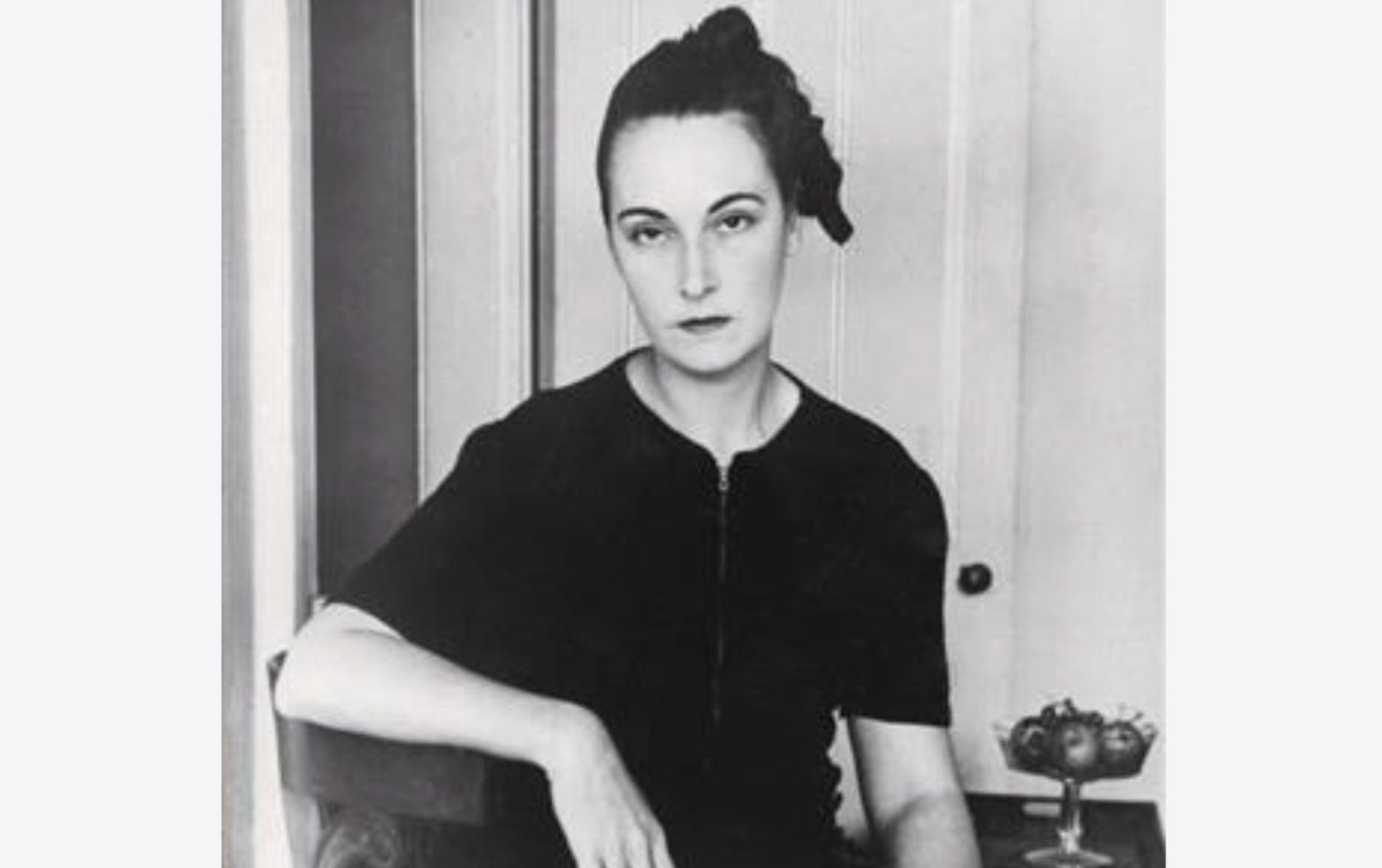
Which is how Carmen Herrera came to mind. You’ve probably never heard of her. For most of her life, almost nobody had.
Carmen made paintings almost no one saw.
She trained as an architect in Havana, moved to Paris after the war, and settled for good in New York in the 1950s, making abstract work the whole time, in sharp lines, two colours, a lot of white and green.
“There is nothing I love more than to make a straight line,” she said, and she meant it literally. Her cleanest series, the white-and-green Blanco y Verde paintings, came out of the 1960s, when New York wanted the drama of Abstract Expressionism and had no use for her restraint.
She was drawing the geometry minimalism would get famous for, before it had the name. Almost none of it sold.
On top of that, a New York gallerist told her that her work was better than the men’s he showed, and that he wouldn’t give her a show anyway, because she was a woman. (Ughhhhh.)
She had every reason to stop. But she kept painting.
Museums passed on her. Barnett Newman was a friend; he got the recognition and the money and the place in the story.
Carmen kept painting.
Right On Time is our weekly series of lessons in courage, clarity, and change for those rewriting their story.
She sold her first painting in 2004, at the age of 89. After that, it moved fast: the MoMA acquisition, then the Whitney retrospective at 101. She had an entire life’s collection behind her.
It’s tempting to read this as a patience story. She held on, and the reward finally came. Wait long enough and you’ll be seen.
That’s not how she described it, though.
Asked how she’d worked all those years with no reward, Carmen said she did it because she had to. It wasn’t a bet on being found later, but her work was the thing itself.
She said obscurity had given her something she’d have hated to lose: no one to satisfy but herself. The work was the point.
The payoff was never the point, which is the only reason the missing payoff, and watching everyone else collect the accolades, didn't hollow it out.
There’s a harder truth folded into that. Most people who make unseen work for decades don’t get the Whitney at 101. Herrera is the exception. The recognition was never something she could count on, and it isn’t something you can, either.
Which is exactly why it can’t be the reason you do the work.
Carmen couldn’t have known where any of it was going. She painted anyway.
You don’t need to know where yours goes, either. You need to identify (or maybe rediscover) the thing you'd get up and make every day whether anyone notices or not — then you figure out how it fits the life you're building.
✌🏻 Miranda
Sources:
You might also like:


