


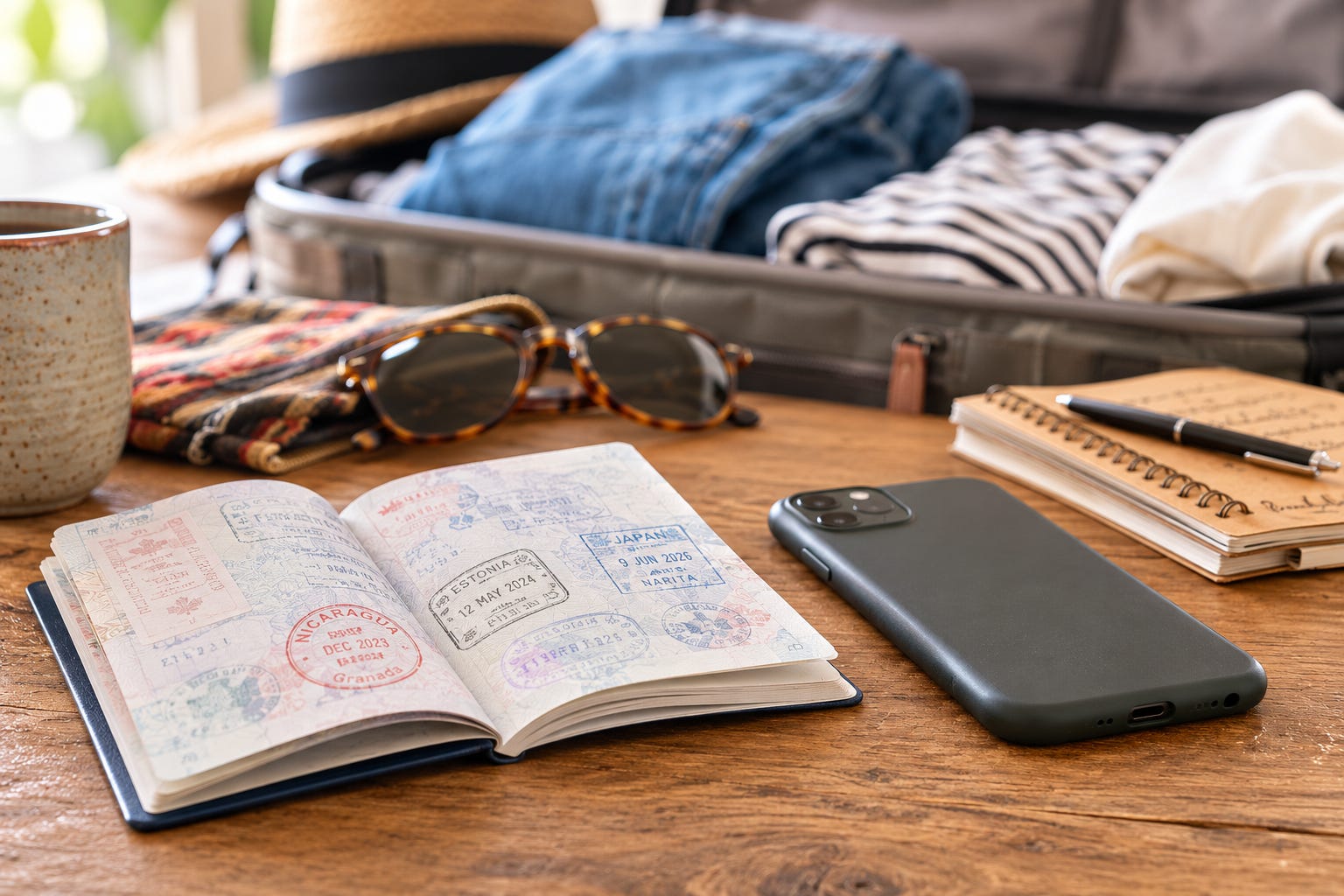
Someone posted a thread last week about how to work remotely from abroad without your employer or clients finding out. Change your Zoom background. Route everything through a VPN so your IP reads as home. Don’t post the location. Keep your calendar vague. And keep your selfies to yourself!
There’s a name for it now. Two, actually.
Quiet vacationing is the umbrella version, where you appear to work while you’re somewhere you haven’t told anyone about. It could be anything from a sneaky afternoon at the nail salon to a laptop open at a ski lodge four hours from home.
Hush trips are the pointier end of the same instinct: keeping your regular hours and your full workload, but logging in from a hotel, an Airbnb, a friend’s place two states over, or a rental in Bali while everyone at work assumes you’re at your kitchen table.
The whole thing runs on one bet: as long as the work gets done, where you did it is nobody’s business.
That thread I mentioned got a lot of excited responses, which truly sucks, because it’s terrible advice. And not for the reason most people push back on it.
The usual objection is you might get caught and fired. True, and worth taking seriously; a corporate laptop with device management often reports its real location to IT regardless of your VPN, so your gear can give you away on its own.
But that framing treats the whole thing as a game of not-getting-caught, where the only failure state is exposure. That’s not the shape of the actual risk.
The actual problem is that hiding doesn't touch the things that can actually go wrong. Most of them aren't triggered by someone finding out. They're triggered by the crossing itself, by the contract you already signed, by the tax residency clock that started running whether or not anyone at head office knows your IP address.
Here's the part that surprises people. You can be a fully authorized remote worker, doing everything above board with your employer's blessing, and still walk into a serious problem the first time you cross a border with a work laptop.
In the US — and this is not hypothetical — border officers can search your electronic devices without a warrant and, in many circumstances, without even a specific suspicion that you’ve done anything.
At borders, you're in a strange legal space where the protections you’d have three feet inside either country don’t fully apply. Depending on the officer and the circumstances, that can mean scrolling your phone, and in a more advanced search, copying the contents of your drive or asking you to log into your accounts.
Now think about what’s on that laptop if you do client work. Proprietary files. A signed agreement that may say, in language you skimmed two years ago, that you will not expose the client’s data to unauthorized access or move it across jurisdictions. Attorney-client material, if you’re in law. Patient information, if you’re in health.
You didn’t leak it. You didn’t do anything careless. You handed it to a border officer because you had no standing to refuse, and now you may be in breach of a contract you fully intended to honour.
For most people reading this, the border scenario is a low-probability event. Most crossings are uneventful; most officers wave you through. I’m not telling you to be afraid of the airport.
I’m telling you that the risk lives somewhere other than where the “hide it” advice is looking. The thread about Zoom backgrounds is answering the question how do I not get caught.
The question that actually matters is what am I exposed to, and to whom did I already promise otherwise.
Those are different questions. The first one has a sneaky, satisfying variety of answers that show up in those threads bragging about working from anywhere. The second question has a real one, so let’s get into it.
The rest of this — the four exposures that actually matter, how to read your own contract for the clause that matters, what to do at a border with a work device, and how to have the conversation with an employer or client instead of hiding from it — is below, for full subscribers.
