


Several years back, while writing for a polar expeditions company, I had the opportunity to travel on one of their ships to Antarctica. I’d been on contract with the company for over four years when a manager decided it was time for me to take a FAM (familiarization) trip.
My role to that point had been to interview guides fresh from the field and tell their stories. Now, I had the opportunity to see it for myself and create a polar adventure story of my own.
I loved the work, writing for this brand, and some of their guides and resident experts were real characters. I had to catch them off the ships, as they obviously had no phone service and very little internet access while onboard.
One, a biologist who specialized in bear studies, could only connect with me at the specific time each week when he came out of the bush somewhere in Russia and went to town to use a phone.
Another was a penguinologist — yes, it’s a real thing.
(Put that in your bag of tricks to get kids motivated, guidance counselors. Yes, Virginia, you really can be anything you want. Anything.)


Anyway, this penguinologist was one of my favourite experts to interview, and I had written a few pieces involving him over the years. So I was delighted to learn that Dr. Tom Hart would be on board the Antarctic expedition I had signed up for in late 2016.
See, these expedition and cruise companies often provide free passage to scientists and researchers in exchange for guiding and lecturing services on board. It’s a far richer experience for passengers to have that level of expertise by their side as they scan the horizon for whales, or try to make sense of the shifting, crackling ice around them.
On sea days, these experts would deliver lectures or host workshops. And of course, chatting with a marine biologist or ornithologist fresh from a hike or a Zodiac ride makes for fascinating dinner conversation.
It helps the experts, too. They often work for universities or non-profit organizations with limited budgets, or are still completing their studies. Reaching these places might otherwise be cost-prohibitive for them. So the relationship between cruise companies and field experts is a win-win.
Anyway, back then, Dr. Hart was a Junior Research Fellow at the University of Oxford (it looks like he’s now a PhD and Senior Lecturer in Conservation and Ecology at Oxford’s Brookes University School of Biological and Medical Sciences).
He has what I still feel must be one of the coolest jobs on the entire planet: researching how to monitor penguin populations despite the obvious challenges posed by the harsh, remote Antarctic landscape.
In this 2014 interview, he explained to me (for Quark) how anyone could get involved in the Penguin Watch program through Penguin Lifelines. The group had about 60 cameras set up on the Antarctic Peninsula and outlying South Atlantic islands at the time, and they needed people at home with their stable internet connections to identify and count penguins in the photos captured at each colony.


Then, Hart needed to go out into the field during the Antarctic summer to check on these cameras and gather penguin DNA, a process explained in that article.
“What we’re doing is getting large numbers of samples. Penguins shed feathers every year, so the samples are lying around everywhere. By analyzing these, we can see which colonies interbreed, how they move geographically over time, etc.” he explained.
So that’s how I ended up in Antarctica, trekking around with a real, live penguinologist.
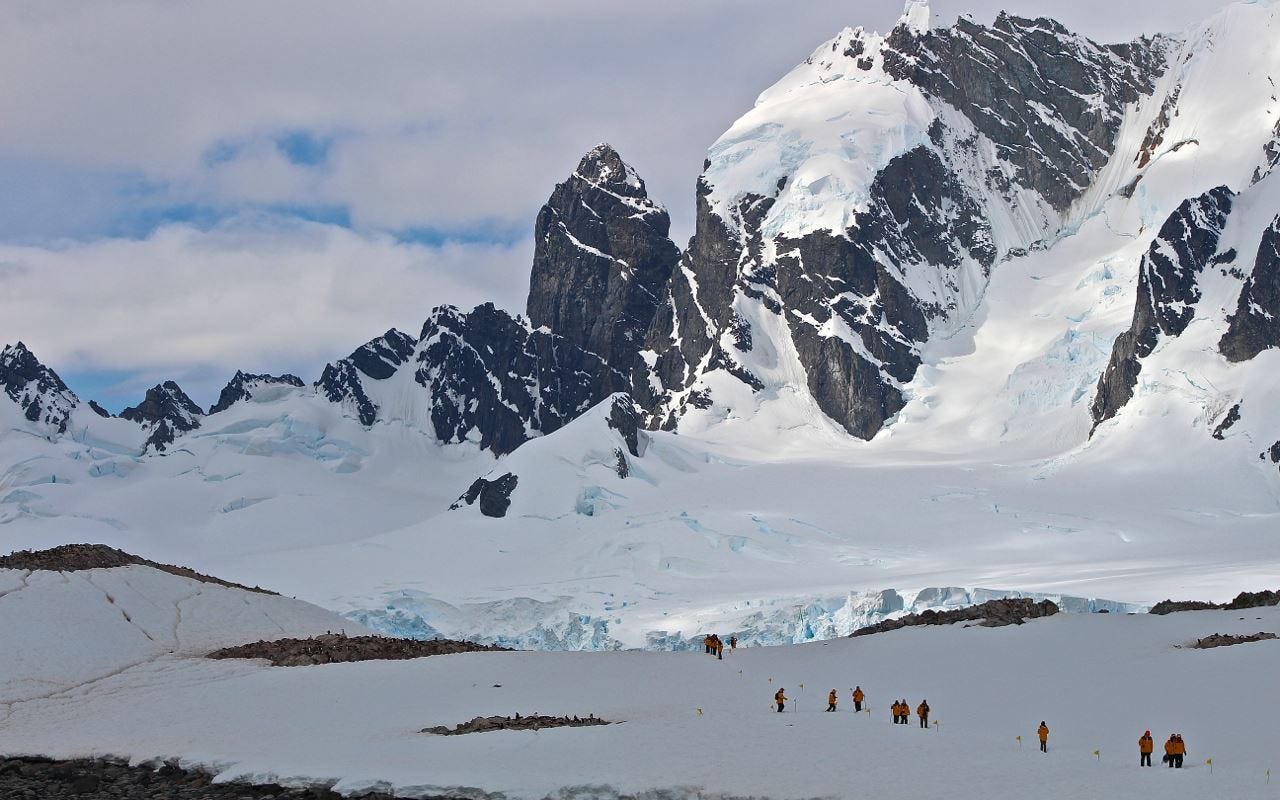
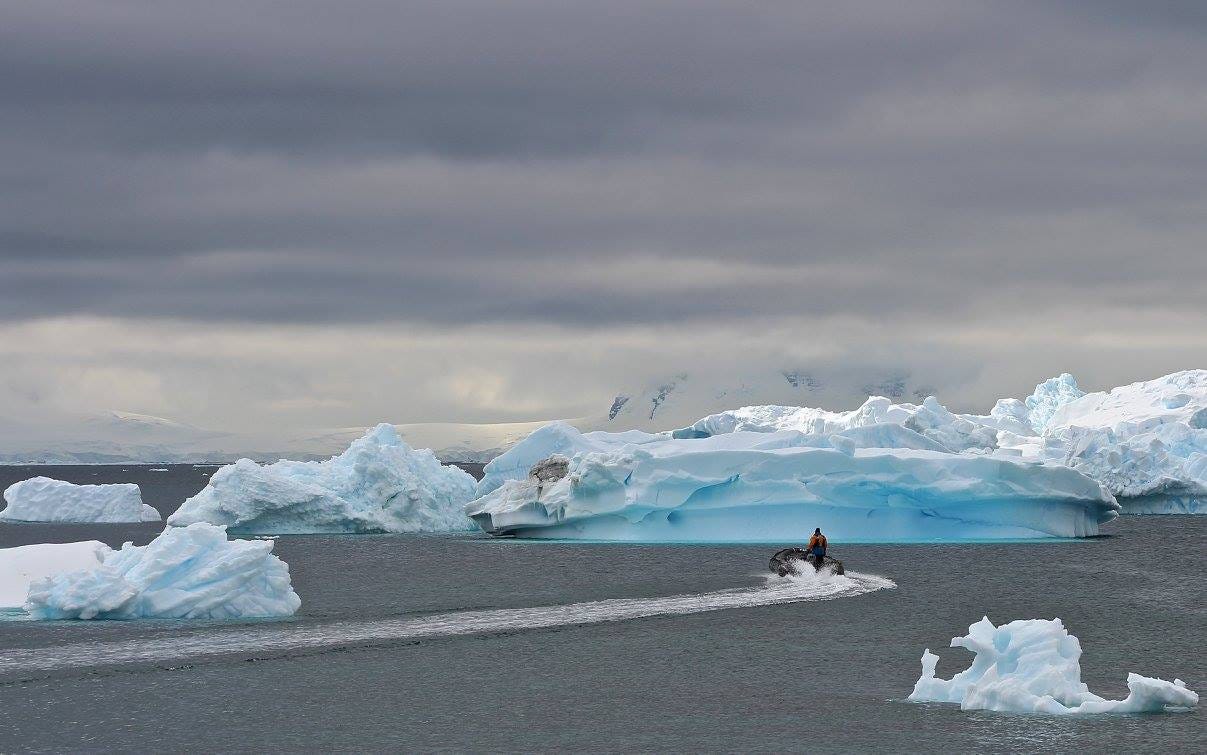
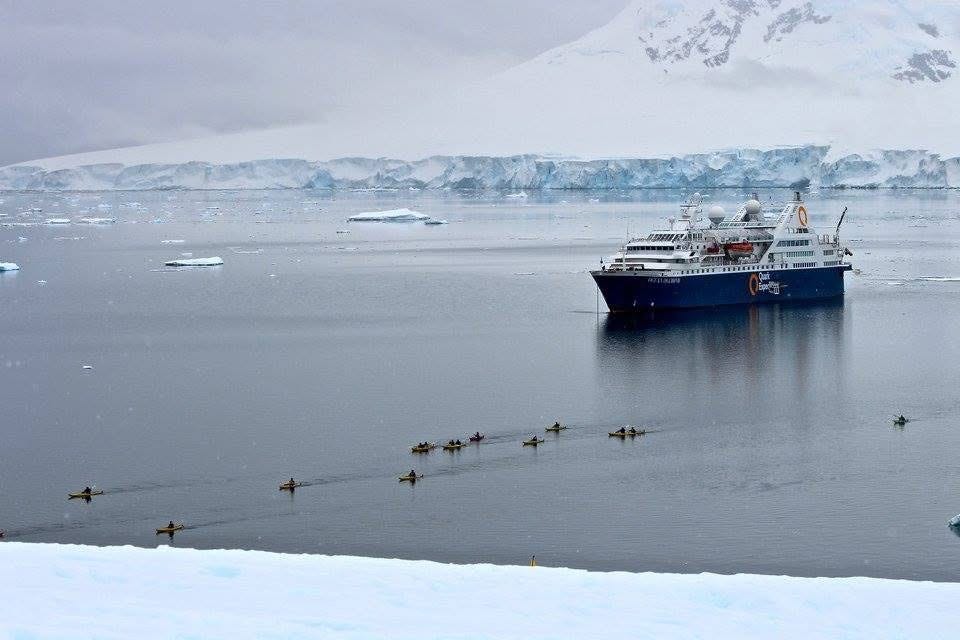
On this particular day, we were all headed to shore to explore. Kayaking is an optional extra ($$) experience onboard, and over a dozen of them headed out ahead of our Zodiacs.
We reached the shore first, and I was able to scurry up the hill to get this shot of the kayakers and our ship below.
Dr. Hart was taking a group with him to the penguin colony, but they had to move fast. I had planned to go with that group, but it quickly became apparent I wasn’t going to be able to keep up at that pace. Frustrated, I gave up that chase.
Other guides were leading passengers on a gentler hike to a colony closer to the beach. In my indecision and stopping to take pics, though, I’d ended up falling behind and suddenly had this overwhelming FOMO. I’d had a plan and now I was missing out on everything!
So there I was, chugging along to catch up with the second group, kicking myself for being indecisive, when I came upon a much older woman laying on her back in the snow.
I recognized her as our oldest passenger on board — she was in her 90s. Immediately, my mind went to concern for her. Had she fallen? Was she injured? I asked if she was alright, and she smiled up at me.
“Oh yes, dear. Just taking it all in.”
I wish now that I’d taken a photo of her then. But that would have been a bit creepy and weird, wouldn’t it? 😂
I’ll never forget her face, though. She was so perfectly content.
If you just sit still, she said, you’ll see so much more. “Look at how all of this changes around us,” she said.
I took another look at her — this tiny, blissed-out snow angel bundled in her parka, her eyes crinkled with the soft folds of time but shining clear; twin mirrors catching the shifting clouds against the icy-white glare of the sky, and the jagged peaks of rock across the channel.
And I took a seat.
In that moment, I realized how bizarre it was to be here, at the edge of the world, feeling frustrated by the version of the experience I thought I should be having… and nearly missing the one I was having, right in front of me.
We sat there in silence, this wise stranger and I, and watched the world change around us. I wouldn’t have been the least bit surprised if a dinosaur had wandered out to graze — it felt that prehistoric, that magical.
As my eyes adjusted to the harsh glare of the snow, I started noticing things I’d missed: the well-worn penguin highways carved into the drifts, like little commuter lanes etched by tiny, determined feet.
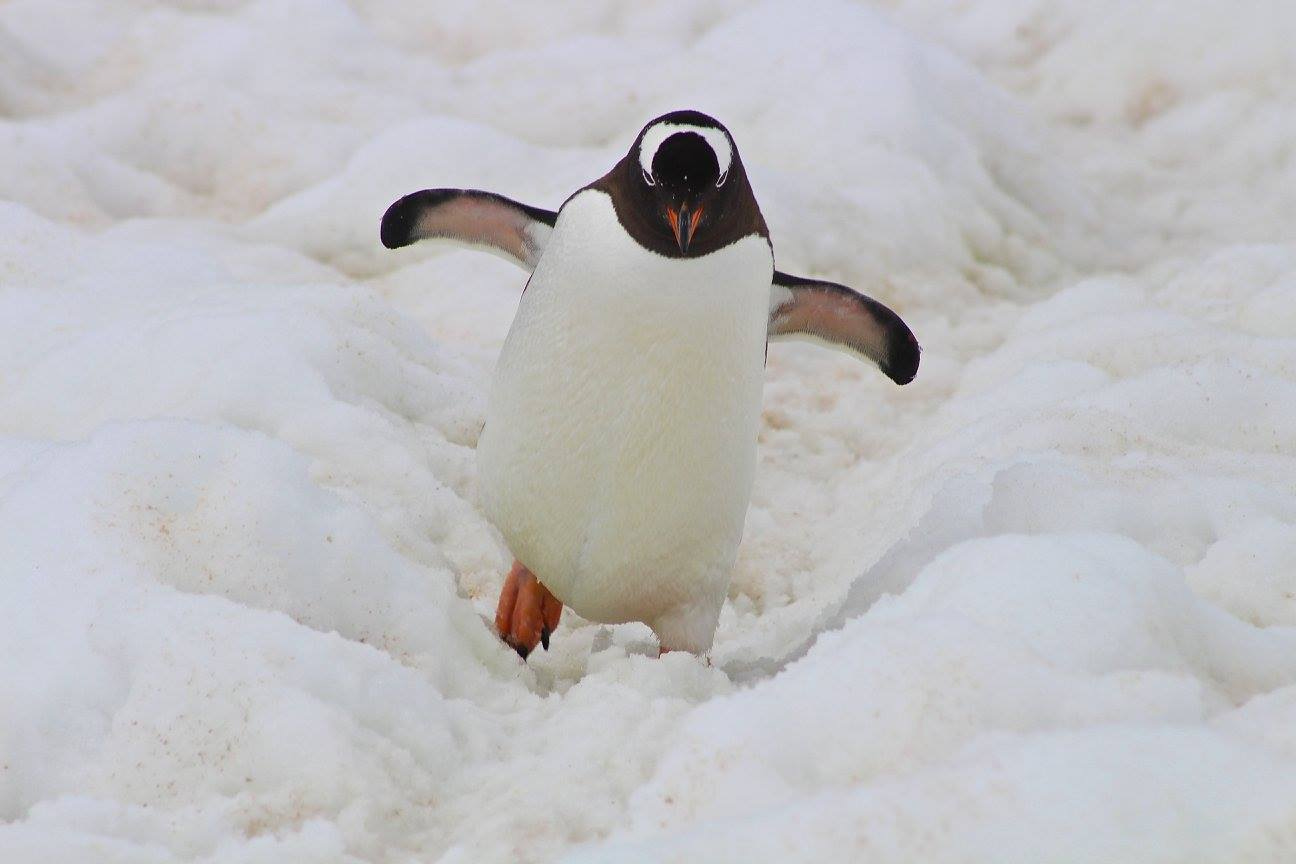
Eventually, they appeared. A few Gentoos came toddling along, unbothered by our presence. Penguins have no fear of us. We’re not allowed to touch them, of course, but if you sit quietly enough, they’ll come right up to inspect you. And they did.
We stayed perfectly still, delighted, as penguins marched around us, checked out our boots, and continued merrily on their way to go fishing.
As the two groups of hikers appeared in the distance, heading back towards the Zodiacs that would return us to the ship, I moved down to the beach for a few more minutes of solitude with our new friends.


I’d set out that morning chasing the perfect photo, the best story. But a stranger gave me an unexpected gift in sharing that slowing down isn’t missing out. It’s how you see what most people rush right past.
That moment stuck with me. As travelers — especially in our digitally-charged, always-on world — we’re great at collecting experiences. But sometimes, we forget to digest them. To sit with what we’ve seen, felt, and learned before racing off to the next thing.
Slowing down helps us be more present in the moment, sure. But it also gives those memories more weight. More meaning.
So many of the photos I took on that first Antarctic trip don’t even seem real. I say “first” because I’m determined to get there again in this lifetime, and I’m certain it’ll be an entirely new experience each time.
Maybe one day, I’ll have the privilege of being that 90-something-year-old woman laying in the snow, laughing at the frenetic pace of the young ‘uns on board, perhaps sharing a quiet moment with a young woman in need of a shift in perspective.
We shall see.
✌🏻 Miranda
You might also like:


Loved the story, Miranda!! And now I want to be a penguinologist :D