

Feeling Like the Unsettled, Unstable One? Let's Go There
A reader writes: “Everyone around me seems settled while I feel unstable and behind.” Let’s talk honestly about stability, resilience, and what security actually looks like today.

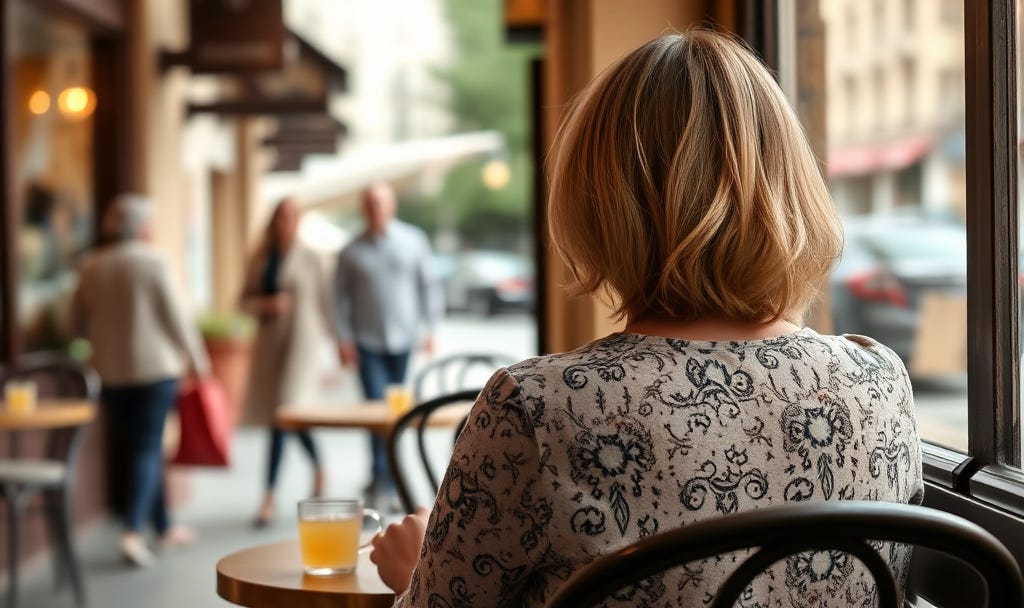
Sometimes it feels like everyone else got the comprehensive instruction manual, and you’re over here staring at cryptic IKEA diagrams trying to piece together a life.
You look around and see people with tidy, stable-looking lives. Long-term partners. Houses with matching furniture. Kids who are grown and starting lives of their own.
Meanwhile, you’re still changing careers, experimenting, rebuilding, figuring things out as you go.
Maybe life interrupted the neat timeline a few times — a divorce, an illness, a career upset, business losses. Any number of things can force you to figure out how to put everything back together again.
Maybe you’ve even had to start over more than once.
And the nagging question creeps in: What’s wrong with me?
Fiona wrote to me recently with exactly that worry.
“I’m in my late 40s and lately I feel like everyone around me has their life figured out. Friends are married or partnered, they own homes, their kids are grown or almost grown.
Meanwhile I feel like I’m constantly rebuilding. A divorce set me back for a while, I’ve changed careers more than once, and I’m still figuring things out.
Some days I look at my life and wonder if I’m just an unstable flake who never managed to get it together. Is it normal to feel this far behind?”
So let’s go there.
When Your Life Doesn’t Follow the Script
First, know that if you’re feeling this way, you’re far from the only one. I hear versions of this all the time from readers and travelers I meet in the real world in their 40s, 50s, and beyond.
People who’ve lived real lives. Chapters that didn’t follow the neat timeline we were shown growing up. A few hard turns that sent the whole thing off the rails.
When you compare that kind of life to the polished version you see around you, it’s easy to feel like you somehow missed the stability memo.
But difficult times are exactly when we build the most valuable, transferrable skills and knowledge… the things that can truly shake you up and open your eyes to something far better than the status quo.
I’m speaking from experience here, as I’ve had to start over more than once. Once with a laundry basket of belongings and two kids under three years old. Another time years later, older, my husband and I living out of short-term rentals and our car while we figured out how to move past being defrauded of our home and savings.
Those chapters didn’t look stable. Not even close.
But losing everything, or even just living a little outside the boundaries of that “normal” we’re taught to put on a pedestal, gives you a peek behind the curtain.
The Hidden Fragility of “Stable” Lives
A lot of what we call stability is actually just loose structure that holds together as long as nothing goes wrong.
In North America, many households are only a few missed paycheques away from real financial trouble. A large portion of lives that look stable from the outside are actually balanced on a pretty narrow financial edge, thanks to:
Mortgages that require two incomes to sustain.
Health insurance tied to a job that can disappear with a round of layoffs.
Rising property taxes, grocery bills, tuition, utilities… monthly expenses that creep up year after year whether your income does or not.

That version of stability can feel secure while everything is going well. The job stays secure. The relationship works. The industry keeps humming along. And sometimes it does. Many people build beautiful lives that way.
But sometimes it doesn’t.
Jobs disappear. Industries change. Companies get bought, downsized, reorganized. Technology reshapes entire careers almost overnight.
When these things happen, people find themselves stuck with a higher monthly burn rate than they can afford, and limitations on what to do about it dictated by the very possessions they’re fighting to keep.
Being stuck in that way is no form of security.
If you’ve had to rebuild a few times already, you may have developed something far more valuable than the appearance of stability.
You’ve built adaptability.
You know how to regroup when the plan falls apart. You know how to find a way forward even when the roadmap disappears.
Those skills don’t always look impressive from the outside. They don’t photograph as nicely as a tidy five-year plan and kids lined up in front of a big house.
But in the world we’re living in now, they matter more than ever.
Why Adaptability Matters More Than Stability
Adaptability isn’t a sign that you’re unstable; it’s a form of security.
It’s not the kind we were raised to chase, with the stable job, the tidy timeline, and the life that unfolds exactly as planned.
But it’s the kind that holds up in a world where things change quickly, and that’s our reality today. The world is far less predictable than the one many of us were raised to expect.
Industries are being reshaped by technology at a pace we’ve never seen before. Entire categories of work are evolving or disappearing. Economies shift quickly. Political tensions ripple across borders and markets. Systems that once felt permanent turn out to be anything but.
Another realization is surfacing for many in these conditions: The safety nets many people assumed would always be there — stable careers, reliable pensions, social programs designed for a different era — aren’t always catching people the way they once did.
Some are discovering that reality only after a layoff, a health crisis, or an unexpected financial shock.
We see the signs everywhere: rising homelessness, communities struggling with addiction, more people medicated for stress and depression as the ground shifts beneath what once felt like a predictable life.
None of that means people are failing.
It means the systems we were taught to rely on are changing faster than we were prepared for.
So if your life doesn’t look as settled as the people around you, it might be worth asking yourself a different question:
What strengths have you built by navigating the unexpected that others with “stability” may never have had to develop?
In a world where the ground is constantly shifting, adaptability may be the most reliable form of security any of us can build.
If this resonates with you, I’d love to hear your story in the comments. Your experience might be exactly what someone else needs to see right now.
✌🏻 Miranda
P.S. Have a burning question about remote work or nomad life, particularly in your 40s and beyond? Submit to hello@midlifenomads.com and I’ll do my best.
Let’s Go There is a candid, question-led column where we unpack the real stuff behind remote work, solo travel, and midlife reinvention. No filters… just honest answers to the questions you’ve been carrying around.
You might also like:


