


There’s a moment, a few days into a good coliving stay, when the place starts to feel less like a guest house and more like a household.
You notice it in small ways. Someone you’ve barely spoken to passes you the pepper without being asked. The dishwasher gets loaded by whoever sees it needs loading. A person walks into the kitchen looking lost, and three different people stop what they’re doing to introduce themselves.
None of that is accidental. It’s the result of work — specific, deliberate work — that someone has been doing in the background since before you arrived. And it’s the difference between a real coliving and the growing number of spaces that apply the “coliving” label without doing any of it.
Few people understand that difference better than Andreea Rusu.
Andreea founded the Coliving Community Builders group on Skool, works as a social media marketer at Coloc Housing, and has volunteered at half a dozen different coliving spaces while visiting fifteen or sixteen more.
She’s spent over five years inside the coliving world.
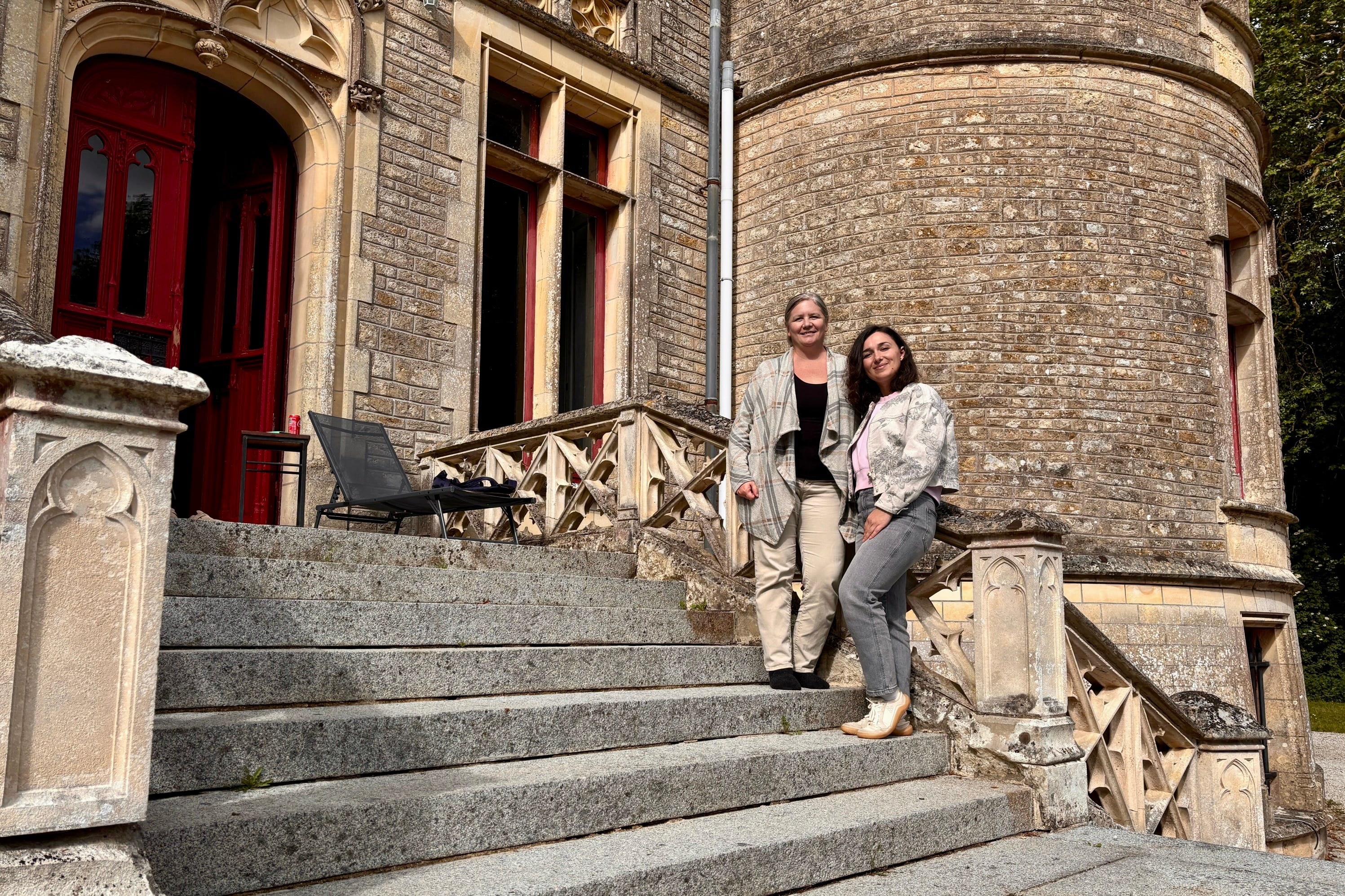
As I write, Andreea is seated beside me on a floral couch in the entryway of a French castle, basking in the mid-May sun, telling me she almost burned out on coliving three years in.
She doesn’t say it for effect. She says it the way you say something you’ve already made peace with — quietly, while other colivers drift in and out of the foyer. The burnout didn’t come from the work, she says. It came from the goodbyes.
“I was hopping for a while from coliving to coliving, meeting so many people, getting really close to them, but then people leave,” Andreea says. “I realized I was becoming heartbroken and lonely. Over time, I wasn’t connecting deeply with people anymore. I was guarding myself.”
She'd met Flo at Anceu, a rural coliving in Spain, and they'd dated long-distance for about a year before she hit the wall.
“It’s a part-time job,” she says of the volunteer community-building work, “but really, you’re in the mental space all the time.”
When the burnout came, she moved in with Flo in Cologne and scaled back her responsibilities in the coliving world. For a while, the domestic life was exactly the antidote she needed… until it wasn’t.
“If I stay at home alone for a few months I might get in a rut,” she says. “It seems like effort to go to that concert, or make plans to go out with friends. In a coliving, things feel effortless… you might have coworking, cooking classes, movie nights, day trips all happening as options you can join. The ease of which life happens is transformative.”
Andreea missed the coliving life. So she became more involved again, but on different terms — fewer back-to-back stays, more time at home, a clearer line around when to engage and when to retreat.
That story alone is worth listening to if you’re considering this life. Because most of what gets written about coliving leans toward the magic… the dinners, the serendipity, the friend from Buenos Aires who turns into a creative collaborator a year later. All of that is real.
But Andreea’s burnout is also real, and she’s not the only person I’ve met who’s lived through it.
Many women I’ve spoken with who are considering a more independent life look at it as a “leap.” They think they have to sell their house, move everything into storage, and start something entirely new that they can do online so they can spend the next year abroad — and colivings are an attractive landing pad.
We put so much pressure on ourselves to have it all figured out before we even begin.
But what’s wrong with just trying it out for a month?
Andreea says that she and Flo now spend about 40% of their year in coliving spaces, 40% at home in Germany with family, and the rest traveling and exploring.
“It’s not a thing you need to become,” she tells me. “You probably know you need to do something different but don’t know how, where, how long to go. You can always come back to what you know.”
Coliving might take a different shape for you. It might be a solution for one or two months of the year. It might be a new way of life. It might be a single two-week stay to see whether the format suits you at all. Any of those is a fine answer.
“Try it without having it all planned out,” she says. “Don’t have too many expectations. Let yourself be open to the experience… this might even bring you more clarity. Maybe that clarity is that coliving isn’t for you and you really prefer the stability of a home life, and that’s a great outcome, too.”
That last sentence is the one I’d tape to your laptop if you’re still on the fence. The trip is not wasted if the answer is no; you’ve gained information and learned about an entirely other way of life that’s open to you, if you so choose.
She also says it’s important to find out what you’re actually buying before you go.
Coliving is not cheap, and it is not a resort
This is where the most common misconception lives. People hear “shared house” and assume it’s a budget option, the digital nomad version of a hostel. Sometimes it is, but more often it isn’t.
A month in a well-run destination coliving can cost more than a private apartment in the same town, particularly once you factor in what the space includes — coworking, organized dinners, day trips, classes, a community manager who actually knows more than your name.
The mistake isn’t paying that price. The mistake is paying it and then behaving like a guest at a hotel.
“In a coliving space, you’re not the centre of attention. No one is waiting on you,” Andreea says. “You’re equal, and you’re part of building something together.”
This is the thing most newcomers get wrong, and it’s the thing she teaches in her community builders group: the experience is co-created.
You’re not buying access to a community. You’re buying the conditions in which a community can form, and then you’re one of the people forming it.
The handpan and guitar jam on Tuesday night doesn’t happen because the house manager scheduled it. It happens because someone brought a handpan and someone else asked if they could try, and then a third person came downstairs because they heard music.
Family dinner isn’t an affair prepared by staff. It happens because everyone in the house got together on Sunday night and co-created the schedule for the next week, and a delightful woman offered to share the bolognese recipe she’s been working on perfecting this month.
If you arrive to a coliving expecting to be entertained, you’ll be disappointed.
If you arrive willing to contribute — your skills, your curiosity, the dish you know how to cook, the conversation you’re willing to start — you’ll get something most paid travel experiences can’t give you.
There’s a philosophy Andreea developed somewhere in those early years of hopping between spaces, and she says it almost in passing, the way people say things they’ve stopped needing to defend: through collaboration and contribution, we grow faster than through competition.
You can feel that sentence operating in a good coliving the way you can feel the temperature in a room.
Generosity: the secret ingredient that keeps coliving alive
Andreea tells me about a coliving in Spain where the entire operational playbook — how they run events, how they onboard guests, how they handle the awkward middle weeks of a long stay — lives in a Notion that’s open to everyone. No password. No proprietary protection.
Her first thought, she admits, was that someone could copy the whole thing and become a competitor down the road.
But that’s not how it works.
“These weren’t treated like proprietary secrets,” she says. “Them being so generous and sharing what they know, it’s good for the entire industry, and they become leaders other colivings can emulate. You don’t have to be afraid to share what you know, because there’s a very long way from knowing how to do it and actually being able to do it.”
The philosophy she’s worked within since then — collective wisdom she’s learned in the space — is simple and powerful:
Through collaboration and contribution, we grow faster than through competition.
Operators who share what they know make the whole format better, and the format is what they all depend on.
The same is true for the people staying in these houses. The coliver who tells the next arrival which café has the good wifi, who shares a contact at a visa office, who passes along the lesson they learned the expensive way — that person is doing the work that keeps these communities healthy.
It takes better operators and better colivers, both showing up and sharing what they know, to make any of this work. The spaces that thrive are the ones where everyone has internalized that.
The way in was working, not paying
Andreea is Romanian, and she started in colivings the way a lot of people from countries without easy access to digital nomad money start in colivings: as a volunteer. She wanted to travel. She knew she couldn’t afford to drop a month’s rent on a coliving space in Western Europe.
So she offered to write blogs, take photos, run social media, do light maintenance — whatever a coliving needed — in exchange for a room and a seat at the table.
“Marketing was the career I chose, but then community building chose me. People started calling me a community builder and I didn’t even know what that was,” she laughs.
Her first stay, she planned to stay a month and ended up staying five.
“I had no certification, nothing,” she says. “But the owners speak to each other. I started getting recommendations from one coliving to the next.”
Early in her career, she’d developed something most people who pay their way into colivings never quite develop: a working understanding of how these places actually run.
It’s also the most honest and affordable way to find out whether the format suits you.
“To become a great coliver, try to be a volunteer for a month or two to see what it actually takes to run a coliving space and build community,” she tells me.
Most destination colivings need volunteers. It is not the only way in, but it’s a way in that costs you nothing but your time, and you’ll come out of it knowing more about coliving than most paying guests ever will.
"This is how I got involved in Coliving Hub, a non-profit coliving organizers' association, with Haz (Memon). I started volunteering with them and have been with them about three years now,” she adds.
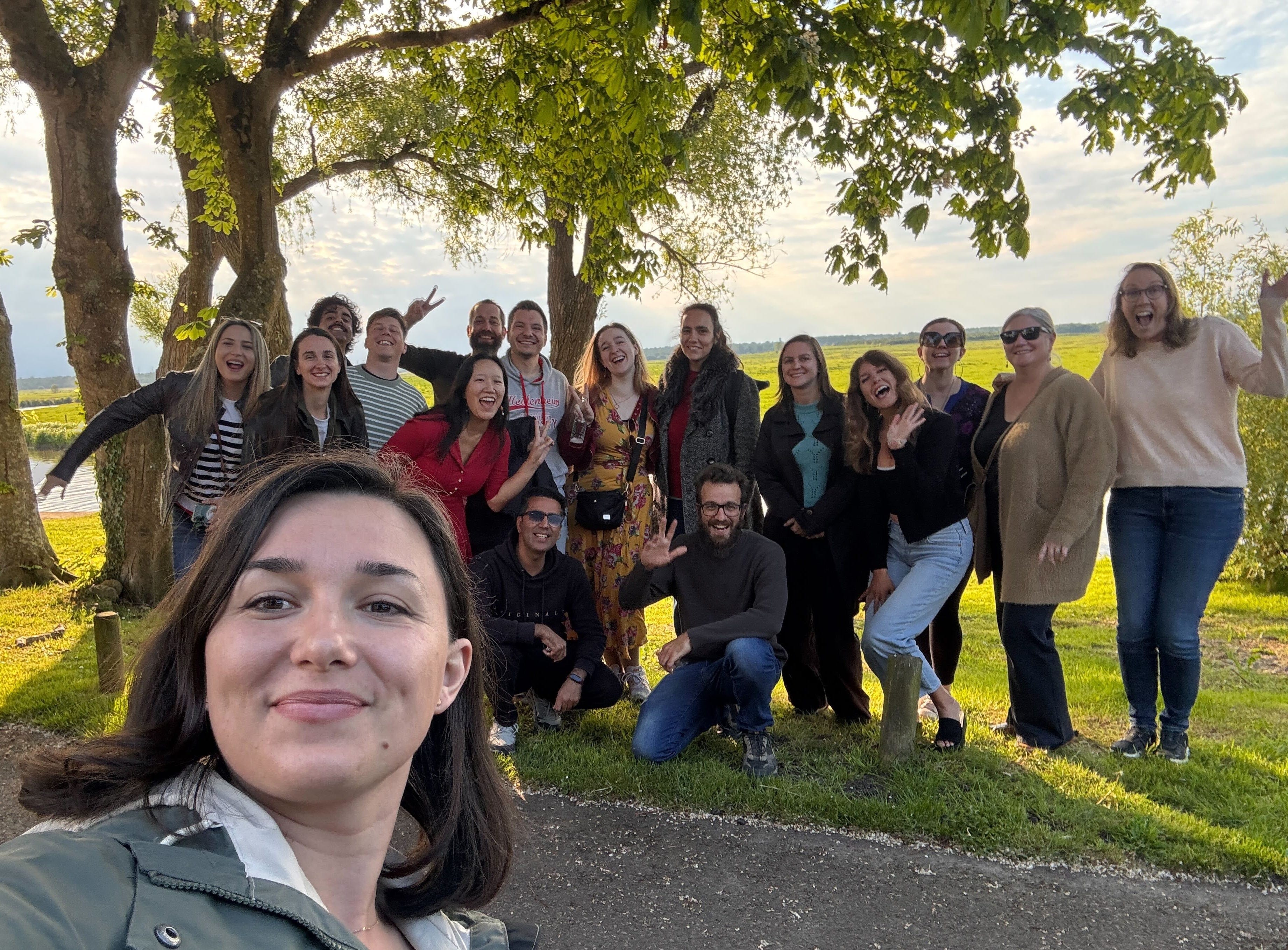
(Sidenote: Haz and his partner, Fanny, are here with us at the Chateau, too! If you’re interested in actually starting a coliving, you’ll want to check out Coliving Hub’s certification program, and also the ‘Coliving for a Living’ consulting program from Chateau Coliving..)
The hallmarks of a true coliving space
Here’s a practical filter for those exploring coliving booking options, since one of the things this newsletter exists to do is save you from learning expensive lessons the hard way:
If the space you’re looking at doesn’t have on-site community management…
If it’s just a WhatsApp group and a front desk person who hands you a key…
Then it’s probably not the kind of coliving Andreea and I are talking about.
It might still be a nice place to stay. The wifi might be excellent. But the thing that makes coliving coliving, as opposed to a shared apartment with strangers, is the deliberate work of the type of community building Andreea does.
There’s someone whose job it is to introduce new arrivals to the people already there. Someone who notices when a guest has been eating alone for three nights in a row and makes a gentle intervention. Someone who plans the kind of activities that pull people out of their rooms without forcing them.
That work is invisible when it’s done well. But you sure notice its absence.
When Andreea talks about destination coliving spaces, this is what she means. Anceu in rural Spain, where she met Flo. Swiss Escape in the Alps. Cloud Citadel in the French mountains. Chateau Coliving, the castle we’re sitting in right now.
Different countries, different price points, different vibes — but all of them have someone (or a group of someones) whose entire purpose is to make the human part work. And that fosters a certain type of experience unique to destination colivings.
What you actually get out of coliving
Toward the end of our conversation, I asked Andreea what she’d actually gotten out of all this. Not the version she’d put in a pitch deck for the format. The real one.
She thought about it for a minute.
“The people, the community, the way we can live multiple lives through all these people we meet from all over the world — it helps me see the world very differently,” she said. “My life expands so much in these places.”
That’s the line I keep coming back to. We can live multiple lives. Not in the sense of reinvention, or starting over, or any of the other shapes that idea takes in the self-help section.
In the sense that every person you spend a week eating dinner with is a window into a life you didn’t get to live yourself — the architect who left Barcelona to write fiction, the developer who’s been working from a different country every month for three years, the woman in her sixties who finally took the sabbatical she’d been postponing since 1998.
You don’t become those people. But for a little while, you get to see what the world looks like from where they’re standing. And then you go back to your own life carrying forward some of what you saw.
“Colivings will be part of our lives now for the rest of our lives,” Andreea promises. “I’m so lucky I discovered this way of living.”
Andreea runs the Coliving Community Builders group on Skool, where she teaches the craft of building community in coliving spaces. If you want to understand how these spaces actually work from the inside — which, in my experience, is the best way to know whether you’ll thrive in one — that’s the room to be in.
The video she made a few years ago about her early coliving days, where she introduces three of the destination colivings I mentioned above, is worth twelve minutes of your time:
You might also like:


