

A Love Letter to the Unconventional Christmas
What if you didn’t have to survive the holidays? What if you could reshape them entirely? This is what happened when I started doing Christmas differently.

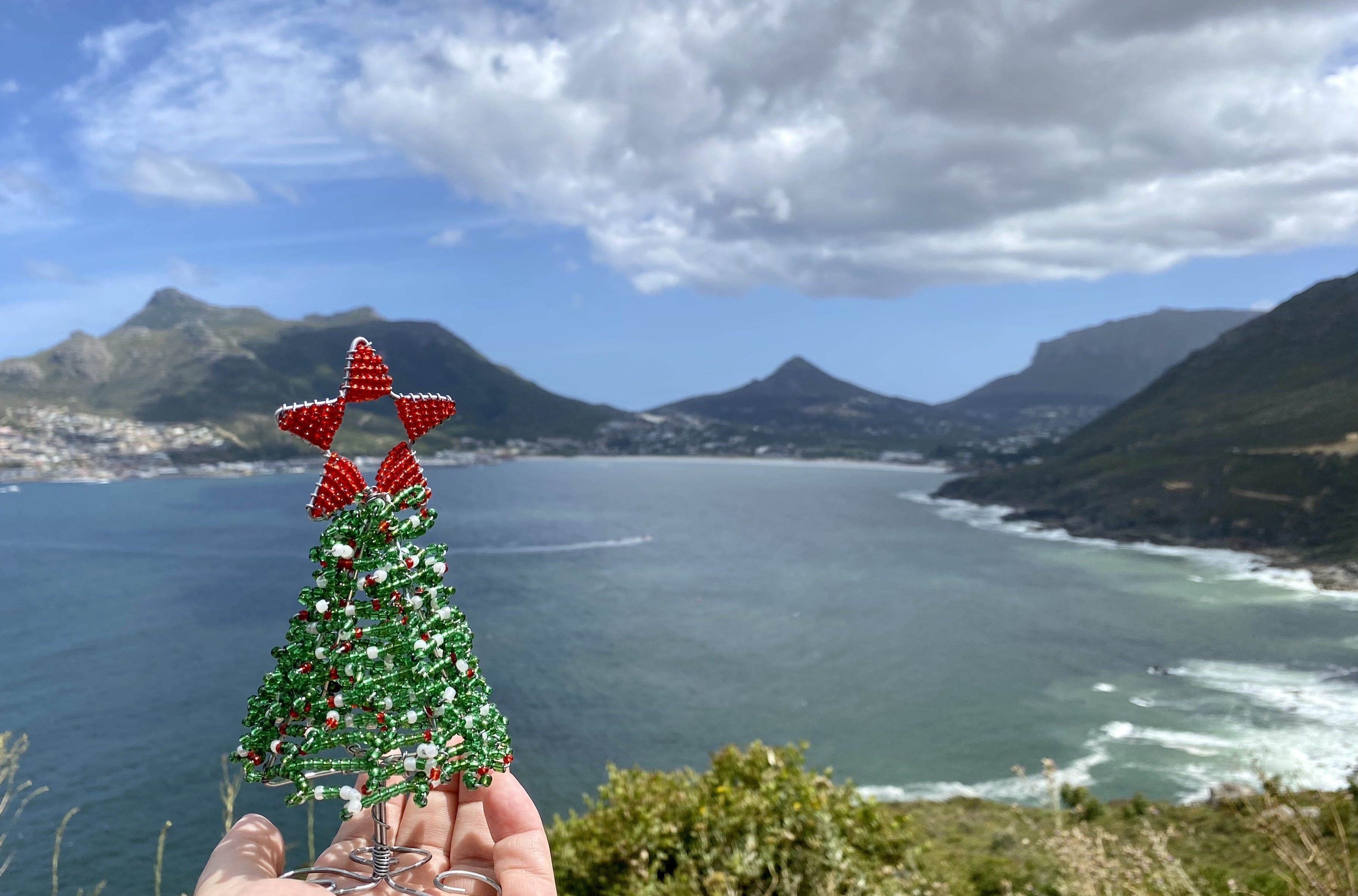
I’m writing this from a house I’m sharing with a friend in Mexico. It’s warm and humid, the patio greenery is rustling in the breeze, and live music drifts up from the street.
I celebrated Christmas in Canada last week with my husband and children, my mom, my sister and her family. We did the tree. The food. The gifts. The gathering.
It was lovely. And now, I’m here.
We made hors d’oeuvres and hosted a holiday party last night, with a few guests from all over. There was my Spanish teacher, who’s from Spain but lives here now. My roomie’s Scottish business partner, and a fellow Canadian who lost her passport and was stuck here until today.
We’re not the misfits or “lost toys,” though it felt a bit like that the first year I decided to do Christmas differently.
I’ve been travelling over Christmas, more often than not, since 2017. That was the year my dad died, but honestly, Christmas was always complicated.
When you grow up in a home with addiction, the holidays aren’t always joyful. They’re unpredictable and heavy with tension. Some years, Christmas meant blowout fights. Other years, just silence. My dad left when I was 12, but even then, his absence hung in the air, unfinished, unresolved.
He missed a lot of holidays; there was always some excuse. And we were never quite sure which version of him would show up if he did.


Early adulthood brought more holiday trauma. One year, my mom called me at work, her voice trembling, and I’ll never forget it. Our duplex neighbour — the ‘nice guy’ who lived upstairs with his girlfriend and a couple of dogs — had driven to his brother’s house and murdered both him and his sister-in-law on Christmas Day, then came home to the apartment upstairs and threatened to blow up the house when police arrived.
There are stories like that baked into the season for so many of us, but you don’t need something that dark to feel overwhelmed by the weight of Christmas. For some, it’s a fresh grief. For others, a long-standing loneliness, or the impossible performance of joy.
I had a lot of great Christmases, too — don’t get me wrong. Being around my Grandma Edna’s table as a child, with all the cousins, will never leave me. And holidays with my sons when they were young were magical. I had the opportunity to make Christmas ours for many years, and am grateful for that.
There came a time when that needed to change… a younger sister joined their family at their dad’s house, and they wanted to spend Christmas morning with her — understandably. I wanted that for them, too. Still, that decision, that change, came with a lot of emotion, and meant that phase was over for me.
After my dad passed, there were other fractures. I learned that saying goodbye to an alcoholic parent also means grieving any remaining hope you had that they would recover; that things would change for the better.
Another family member quietly removed me from their life that year, without explanation, locking me out of family gatherings I had once been part of year-round, including Christmas. I still don’t know why. I was never told. But it left me feeling like the floor had dropped out beneath a season that already felt unsteady.
For many, the holiday season is like this. It’s become a pressure cooker of memories and expectations that don’t quite match the life we’re living now.
So I made a choice. Not because it felt easy or brave, but because staying in that heaviness, pretending everything was fine, felt exponentially worse.
That first year I left, I went to Gran Canaria in the Canary Islands. I didn’t have much of a plan… just a hostel booked for the first few nights and a rental car waiting at the airport.


I met a woman at the hostel that first night, another solo traveler. She was cycling the island. I quickly learned she had also lost a parent earlier in the year, and neither of us wanted to be at home for Christmas.
There was no pressure to talk about it. No need to make it a thing. It just… came up. And it made us both feel a little less alone.
We decided to rent an Airbnb together at the bottom of the island. She would cycle there. I’d take my time driving, stopping to explore towns along the way. We met up again, shared a 2-bedroom flat, and spent the next several days making simple food, listening to music, taking swims and wandering through the village.
Just two women with complicated Decembers, giving ourselves permission to make the holiday into something gentler, something that fit. There were no expectations. No family tension. No pretending. It was light, it was low-stakes, and exactly what I needed at the time.
It reminded me how good it can feel to connect with someone outside your usual orbit, too, especially when they’re also choosing something different, something deliberate.
Then I moved on to a cave hostel in the mountains — yes, an actual hostel carved into the side of a mountain (which unfortunately closed down during COVID). I spent Christmas Eve through Boxing Day there, surrounded by travellers from around the world.
We had a potluck Christmas Eve, and each person or small group made a dish from their home country. No one expected anything. We just cooked, shared stories, and took in the views.


I crawled into my bunk that night, full of good food and conversation, exhausted from physical activity and socializing. Something woke me up in the middle of the night… the hostel cat had curled up in the warm spot behind my knees.
And I remember thinking: This. This is what I needed.
Since then, I’ve made a habit of it. I plan the holidays with my family… maybe early, maybe late. It doesn’t have to be on the 25th; in fact, that’s usually inconvenient for everyone, so I don’t force it. Then I plan my Christmas adventure. I try to go somewhere warm before the flights get expensive, and stay long enough to come back (or travel onward) after New Year’s when things settle down again.
Sometimes my husband joins me. Sometimes I go solo. One year, it was Portugal; another was Ecuador. Mexico or Nicaragua have become personal favourites. I chase warmth now… not just for the weather, but for my body, my mind, my heart.
The heaviness doesn’t follow me quite as easily, or maybe I’m more capable of drowning it out in places full of light and colour and music. It’s better for my family, too, because when I am with them, I can show up as a better version of myself. Present. Rested. Not hollowed out by obligation.
Listen, I know this kind of Christmas might sound impossible. Irreverent. Even offensive to some people in your life. I know the pressure to be there, to hold the line of tradition, can feel immovable.
But if you’re reading this and longing for something different, I want you to hear this clearly:
You have permission.
You’re allowed to do Christmas your way.
If the version of Christmas you inherited doesn’t fit anymore, you don’t have to squeeze yourself into it. You can make space for something that does.
That might mean getting on a plane. It might just mean saying no to one event that drains you. You don’t have to earn the right to protect your peace. You don’t have to explain why some traditions don’t work for you anymore. You already know what leaves you feeling empty and sad.
You already know what fills your cup, too. What would it look like to say yes to that?
Maybe it means creating a new ritual. Maybe it means skipping the tree. Maybe it means celebrating early, or late, or not at all. Maybe it’s a potluck in a cave with strangers. Or a quiet day at home, off social media, doing only what feels good and right.
If Christmas leaves you raw, exhausted, or pretending, something needs to change. You know it does.
It doesn’t have to be dramatic. It just has to be yours.
✌🏻 Miranda
You might also like:


